The words of Putinism edit
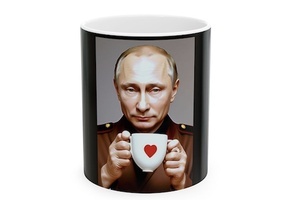
Two books have just been published in quick succession to help us decipher the language of Putinism. Michel Niqueux, a Russian translator and Professor Emeritus of Russian Literature and Civilization at the University of Caen, offers a Vocabulaire du poutinisme (Vocabulary of Putinism, Éditions À l’Est de Brest-Litovsk, 2025). While this work builds on his broader reflections on Russia, it stands apart through its concise style aimed at the general public. The other publication is Au nom du père (In the Name of the Father, Éditions Tourgueneff, 2026), written by Louis Arcueil, places Putin’s words into a broader theoretical framework. In the tradition of new Russian despotism, this time Putin appears as a paradoxical figure, though not entirely unprecedented.
Putin Between Light and Shadow
For over two decades, there has been no shortage of books on Vladimir Putin-whether they aim to trace his life in detailed biographies; examine his role in the evolution of modern Russia or analyze his ties to the Russian secret service and the mafia within the corridors of power. Some authors compile his interviews to decipher his personality based on what he himself says; others identify his ideological sources based on what Putin appears to think; and still others revisit historical questions in an effort to understand the continuities between the concepts of tsar and leader (вождь), sometimes equating Putin and Stalin with the same “phraseological cliché.” These books offer various aspects or facets of the figure—some of them hidden—focusing on his personality, his own words, and his actions-which are in turn commented on and interpreted by ambassadors, political scientists, journalists, and historians. Michel Niqueux, in his concise and thought-provoking *Vocabulaire du poutinisme’ clarifies, in the introduction, the context of Putin’s rise to power in 1999–2000, while highlighting the disconnect between the real Russia and the Russia fantasized about in the west through the weight of words whose roots sometimes extend well before the 19th century. Putin, who had been relatively reticent up until then, quickly emerged from the shadows. He was described as the following: “Here is a strong man, worthy of being the president, in whom virtually all Russian citizens place their hopes for the future.( ” Gaining confidence through his words, Putin indeed crystallized the deep aspirations of his citizens who had been humiliated and traumatized during the period of national weakness in the 1990s marked by the collapse of the USSR, followed by the political chaos that ensued after the severe economic crisis of 1997. After being appointed Prime Minister in 1999, Vladimir Putin became President of Russia in March 2000, elected with 53% of the vote. Three years later, according to VTsIOM, Russians considered the most outstanding (выдающийся) leaders of the XXth century to be: Vladimir Putin (26%), Joseph Stalin (19%), and the last Russian tsar, Nicholas II (12%). In 2008, according to the same VTsIOM, 80% of Russians believed that since Nicholas II, Putin’s presidency had become the best period in Russian history. Putin’s rhetoric undoubtedly contributed to this overwhelming support. Then in 2024, after nearly twenty-five years of virtually uninterrupted rule, he was re-elected with 88% of the votes cast in a largely rigged election. Yet we tend to forget how certain terms coined over the past twenty-five years have also contributed to the rise of “Putinism,” a new ideological-political construct in post-Soviet Russia.
Naming Putinism
Michel Niqueux’s analyses help us understand how, little by little, an entire appropriate vocabulary was forged, legitimized by Putin’s rise to power in 2000. This Vocabulary of Putinism seeks to interpret what it means to speak in Russia. For all the words listed here have tangible effects: we could cite “Agent of a Foreign Power,” “Russian civilization,” “denazification,” “de-Westernization,” “Russian Idea,” “Russian World,” “multipolarity,” “special military operation ,” “Stalin,” “traditional values,” etc.[2] Each word, placed in its context, is dissected to trace its origins. Most often they draw, in their own way, on recent debates among Kremlin ideologues to fabricate or align with an unfolding narrative. This Vocabulary of Putinism measures the gulf separating the values of the “Satanic West” from the Russian Idea championed against the backdrop of a new nationalism (p. 9).
Michel Niqueux deciphers some forty keywords recurring today- in Putinist propaganda discourse-to offer a snapshot of a spoken and immediate history. The Russian language, corrupted if not profaned, finds itself at odds with its semantic ideologization. The book places this within a historical context, often contrasting it with the Perestroika period (1985–1991), nostalgically revisited, and the origin of a brief democratic turning point that quickly capsized. Initiated by Mikhail Gorbachev-after decades of totalitarian rhetoric and political doublespeak-his Perestroika—which Putin later derided—had succeeded in opening up free speech but, above all, it had helped rehabilitate a vocabulary that had been banned from the public sphere.
Perestroika (restructuring), a slogan that actually originated in the Stalinist era, was thus already very much a matter of words, combined with glasnost (openness). At that time frame those slogans were part of a new reclamation of language in the face of the totalitarian double-speak of the Soviet era which had stripped them of their meaning. In the midst of the absurd, humor remained the bulwark, an essential counterforce in an official USSR made up of acronyms, slogans, and deceitful speeches. Michel Niqueux analyzed this in another work, Vocabulaire de la Perestroïka, a mirror image of his Vocabulaire du poutinisme[3]. Nearly thirty-five years later, Putin has gradually managed to “take the opposite stance to Gorbachev’s Perestroika in all areas of life…” (p. 7). We can thus clearly see the journey these key words have taken from Putin’s rise to power through and up to the invasion of Ukraine on February 24, 2022. Under the influence of ideologues such as Dugin, Ilyin, Karaganov, Medinsky, and others, the use of this vocabulary reduces Russian political discourse to binary and stereotypical phrases-simplifying and weaking language for the purpose of re-writing new historical “truth” in the service of power. By instrumentalizing these issues, the concepts, when employed, appear schematic and confused (the Russian idea, the Russian soul, the collective West, the great Humanity, etc.).
Through their combined and cumulative effects, the terms chosen for the Vocabulary of Putinism extend far beyond Putin alone. For example, the latest anathemas—which have become a legal force to discredit an adversary, the “Ukrainian Nazi” in Kyiv, or to designate an enemy, the “foreign agent,” in Moscow--do not merely target a phantasmal adversary but deeply revive the old Leninist rhetoric that founded the communist regime and later became a totalitarian system during the Stalinist era.
The Status of Public Discourse
These words also owe their existence to a long history of power, where their beginnings draw from the classical repertoire of Russian thought since the 19th century, and were enriched by the contributions of successive ideologies.
This is what Louis Arcueil seeks to explore in an equally stimulating essay, *In the Name of the Father*, demonstrating how, on the Russian public stage, these words are embedded in a tradition and a generational continuity. This work, based on some twenty selected words (Strong, Virile and Desired, Imperial, Divine, etc.), helps us understand Russian despotism through a series of historical and philosophical connections. Louis Arcueil quotes Dostoevsky from Notes from the House of the Dead: “The man and the citizen die forever in the tyrant.” Set within a longer historical span, ‘In the Name of the Father’ refers both to the veneration of ancestors and to the attachment to the Russian land—that of a homeland to be defended—to understand its references to religion, particularly to Orthodoxy, which is dedicated to strengthening a whole series of spiritual bonds beyond good and evil.
The authoritarian figure of power, from Ivan the Terrible to Peter the Great—a replica of paternal authority—already governed all relations between God and the sovereign by acting upon all individuals[4]. Vernacular names are rooted in a mythical past that can be traced back to Kievan Rus’, reinforcing false beliefs in the idea of a Russian nation founded solely on this “Great Russia.” With the aid of a religious revival centered on Orthodoxy, Russia has become a “civilization-state” in search of liberating missions to legitimize its imperial wars. Consecrated by the defunct Russian Empire, the phenomenon of Russian renewal thus becomes a “key concept” under Putin. In the Name of the Father deciphers the consequences of these new semantic servitudes. These are far from exceptional or exclusively specific to Russia, even if submission and apathy manifest themselves there with insistence and excess.
We can thus assess the impact of words both outside and inside a Russia that has become multicultural, yet where the Russian language remained the lingua franca both within the empire and in the post-Soviet era. Today, the various wars (Chechnya, Georgia, Syria, Ukraine) waged by the Putin regime—in the tradition of authoritarian regimes nostalgic for a lost empire and a mythical Russia—are also fought in the name of minority speakers of Russian who must be saved in the former empire’s outlying regions that gained independence in 1991. But the Russian language is in decline everywhere, while Ukraine is denied the very essence of its right to exist. Many of these punished peoples (Balts, Georgians, Ukrainians…) now refuse to speak Russian; the language is taught much less than before-given they endured such Russian domination in those prior years. *In the Name of the Father* sheds light on various fundamental political questions that cast Putinism as the defender of the language within this imperial legacy.
The Russian language hence sheds light on the tragic reality of the country today for example, in this context of war, many words may seem prescriptive, if not extravagant, absurd or even sometimes produce a comic or grotesque effect; so out of step are they with the country’s reality and its regional disparities. They point to a kind of “political correctness”—one could say, but additionally they point to the remaining-what is unsaid. As Louis Arcueil describes, this public discourse seems to favor unambiguous or categorical terms suggesting an injunctive tone akin to a command reinforced by superlatives. In this type of writing, words begin with capital letters to magnify the person referred to and to emphasize their supremacy-in a style reminiscent of the Soviet Union. Devoid of any genuine reasoning, words must neither raise doubts nor allow for ambiguity. Louis Arcueil refers to Victor Klemperer’s theses, in which the speaker is guided to “believe without understanding” in order to erect new verbal barriers between the master and his subjects. In Nazi Germany, Victor Klemperer noted the relevance of these questions: “Nazism seeped into the flesh and blood of the masses through isolated expressions, turns of phrase, and syntactic forms that were imposed through millions of occurrences and adopted mechanically and unconsciously[5].” Today in Russia, words reflect a reality loudly proclaimed from above but suggesting something that speakers might not always be willing to acknowledge openly. The same was true in the USSR in the daily, schizophrenic practices of double-speak which most often involved keeping silent so as not to be crushed by the totalitarian machine.
For Louis Arcueil, the evolution of vocabulary in Russia marks a deep and unfulfilled desire to dominate. In the Name of the Father once again embodies in Russian history this tyrannical and arbitrary will of a single man. The object of praise, the “great leader” is paradoxically growing ever more distant from his subjects, becoming inaccessible, isolated in the Kremlin within his Ivory Tower-far removed from the plight of his fellow citizens. The sinking of the Kursk nuclear submarine in August 2000 in the Barents Sea, with 118 crew members on board, exposed this reality when Putin, having just become President, refused all foreign assistance for the rescue and expressed no public compassion despite the enormous coverage this disaster received over all Russian media[6]. But words take on different significance depending on the demands of the moment. For example, the Special Military Operation, abbreviated as SVO, has quietly become a full-fledged war—a term then far too loaded with connotations and which was banned in 2022. Images in Russian media portray—or rather, invite us to imagine—their leader as almost disembodied, more ideal than real, a figure who, through constant mythologizing, eventually becomes the new icon of the Russian world.
This book traces the evolution of language as public discourse seeps into the daily consciousness of individuals through tightly controlled media. In 2000, Putin was a mere unknown figure; whereas, the title of “leader” now enshrines him, identifying him with a virtually immutable sovereign function.
But do words always allow us to accurately gauge the reality of this governance or its fragility? Especially among a young generation in Russia that has known nothing save Putin for twenty-five years? The author remains retrained on this point but recalls how, in 2020, during debates on amending the Constitution, a proposal was made to replace the title of the head of state: “the term правитель—from the same root as the verb править (‘to lead,’ ‘to govern’)— the noun право (“right”) and the adverb правильно (“rightly,” “well”)—had everything going for it: both in its solemn, emphatic tone and in its traditional, archaic meaning. As for the frequently used designation “supreme leader,” верховный правитель, it only further reinforced the idea of his superiority.” But this polysemic debate came to an abrupt end in Moscow as the reality of war drew nearer. According to Louis Arcueil, every word of power conceals a form of instrumentalization: it strives to standardize the leader’s thinking in order to impose his truth in the spirit of a sort of “Orwellian Newspeak” in the service of an authoritarian Russian regime.
The Soviet Semantic and Visual Legacy
Indeed, one might wonder how these two works echo the words or semantic roots that, from the very beginning of the Soviet regime, contributed to the birth of this Orwellian universe, establishing a new language oriented toward “a bright future.” In 1919, Bukharin and Preobrazhensky’s ABC of Communism already cataloged the clichés of Bolshevik ideology to convince Russians of the necessity of war communism. While the Bolsheviks-hunted by Tsarism-were primarily people of the written word living in the clandestine realm of their language, those of Stalinism succeeded in staging their verbosity on screen as early as the first show trials of 1930, filmed for the purposes of [you could day as a tool for] Soviet propaganda. Ironically the two veteran Bolshevik authors were subsequently executed during the terror of 1937, judged by the very buzzwords they had promoted for their own “ ” tribunals, criminalized as enemies in the name of a conspiracy. But their ABC of Communism was widely disseminated during all the Stalinist terrors, just as the films were tasked with amplifying those words. Thus, Sergei Loznitsa’s archival documentary *The Trial* (2018), dedicated to Russian engineers trained during the Tsarist era, deciphers one of the first show trials of that time. Accused of spying for France by a plebeian tribunal led by prosecutor Vyshinsky, all the protagonists of this trial would be shot or sent to the Gulag. Andrei Vishinsky, in all the mass repressions he presided over, distinguished himself through a vulgar vocabulary that led thousands of innocent people to their deaths and into the labor camps[7]. The trials were filmed; the many foreign journalists and intellectuals invited to attend found nothing to criticize at the time, but complicit silence and political doublespeak were never far away. In 1954, at the passing of Vishynsky—who had become the USSR’s representative to the UN in New York—was hailed by the international press almost unanimously, praising his talents as an orator[8].
In his latest fictional film about the 1937 purges, *Two Prosecutors* (2025), Sergei Loznitsa also shows how the victims in his staged trials had to adopt the vocabulary of their tormentors in order to survive. This vocabulary of the past—hinged on, in particular, the “enemy” and “conspiracy”—permeated that entire tragic era of the USSR. While the lexical amplification of these words served to aggravate the classification of crimes during the filmed trials, their euphemization today-through the use of terms like “special operation” instead of “war” permits repression while simultaneously downplaying it. For example, a modernized term like “foreign agent”—is a distant echo of the phrase “fascist cosmopolitan”—and has, like its predecessor, been enshrined in law to become a charge punishable by a severe sentence.
A bellicose Putinism
Since the invasion of Ukraine, beyond Putinism, a new, diverse “war vocabulary” has gradually taken shape, drawing on echoes of a renewed Lenin-Stalinism. His ‘warlord’ stance is not entirely atypical in this regard-given his background as an officer in the KGB’s “ ,” although he has managed over twenty-five years to impose an ideological shift in Russia. But Putin, if one follows these two books, does not seem to have succeeded in establishing a lasting paternal figure—that of a legendary “little father of the people” found in many communist dictatorships that also erected a visual cult of personality.
In the era of globalized digital media, hackneyed or self-contradictory words can also come to mean several things at once. Their appropriations can become confusing, sometimes unpredictable. Just recently, prominent Slavic scholars were pondering the meaning Putin gave to the word “podsvinki”—the plural of “podsvinok”—when referring to European leaders during his latest speech in late December at the Russian Ministry of Defense. Breaking down the word, it translates to “sub-pig,” or by extension, “Europe as the United States’ lackey ”[9]. Much like empty shells, these words may no longer mean anything-serving only to convey nonsense or absurdity, as the philosopher Alexander Zinoviev already observed in the USSR in *The Gaping Heights* (1976)[10]. The terminology of power can serve or enslave at the same time, by claiming to dominate the entire sphere of everyday life. Beyond these words, there remains the cliché, or to quote Hannah Arendt: “the most effective of defense mechanisms… against reality as such[11].”
New Russian propaganda thus employs a whole range of verbal tools to steer meaning and to influence individual and collective perceptions of reality, or to conceal the present and reinvent the past with outdated debris, in order to cobble together a fantastical image of Russian power—past, present, and future. But Putinist vocabulary functions above all as a mental toolbox, in the sense of a weapon (oruzhie) and a tool (orudie) in the Agitprop tradition, with the difference that the words or slogans of the 1920s and 1930s served the idea of a bright future. Putinist rhetoric of the 2020s and 2030s serves no collective future other than that of the state. Its aim is to strengthen the power of technocratic elites seeking revenge for the demise of the Soviet Empire[12]. For as Michel Eltachninoff notes, “the philosophical sources of Putinism, however diverse they may be, all rest on two pillars: the idea of empire and the glorification of war.[13]” Thus, rebuilding cities like Mariupol—80% of which has been destroyed—and confiscating Ukrainian property in the Donbas becomes the key narrative of this war-driven Putinism, which constantly refers to the conquest of imperial lands.
It remains to be seen what the current effects are of this propaganda, which seeks to restore a new ABC of Putinism imposed from above, in order to better understand its real impact on public attitudes—whether there is resistance or grassroots acceptance. On these points, the two books remain fairly discreet, more concerned with showing the connections or consensus at work around this vocabulary. According to some recent surveys, the majority of Russian society seems quite receptive to a set of messages designed to reinforce traditional values. The totalitarian legacy undoubtedly remains present, although today’s Russia, accustomed to a certain degree of abundance, differs from Soviet Russia and its ascetic egalitarian ideal. Whether out of fear of repression or a desire for stability, the majority of Russian citizens have retreated into the private sphere, and this majority exhibits conformism. In available surveys, respondents appear to remain wary of a Russian public sphere that is far too heavily stigmatized, if not perceived as dangerous. By generally subscribing to a whole range of traditional values conveyed by all these terms, they have internalized, as in the past, all of their limitations[14]. But there are still many who perceive the dangers of this war-mongering Putinism without, however, being able to react to it in a largely locked-down public sphere[15]. Thus, a new word has recently appeared in spoken language, “Xolodomor,” echoing the traumatic Great Famine in Ukraine, the “Holodomor” (1932–1933), which claimed several million lives: the X in Xolod (cold) absorbing the G in Golod (hunger) to refer to the current war through wordplay, as the impoverished Ukrainian population prepares to spend a fifth winter in bitter cold.
What it means to speak
These two complementary books, written by leading Russian language experts, provide insights into a specific discourse regime—and into a discourse capable of killing. For the transgression of this political repertoire has, in Russia both yesterday and today, been accompanied by other evils: imprisonment or death. Journalist Anna Politkovskaya learned this the hard way, murdered on October 7, 2006—Putin’s birthday—for having denounced the war in Chechnya in Novaya Gazeta, where she was already investigating the countless murders, tortures, and rapes committed by the Russian army. She had just published Russia According to Putin to highlight the consequences of the Chechen war and describe it: “We are plunging at full speed into a Soviet abyss, into an informational void that condemns us to die of our own ignorance”[16]. Four bullets fired at point-blank range as she left her Moscow apartment symbolize the price she paid for her words in the fight against ignorance. Those who ordered the killing were never truly held accountable. In 2023, Sergey Khadzhikurbanov, one of the organizers of this assassination working for the dictator Ramzan Kadyrov, was pardoned by Putin so he could go fight in Ukraine.
Putinism is therefore not merely a collection of abstract words. It has gradually evolved into a genuine geopolitical program manifested in concrete actions. The experience of words taken to the extreme in the 20th century—in the rallies of Fascist Italy and Nazi Germany, as well as in the Communist Soviet Union, then in Maoist China and dictatorial North Korea—further confirms how all these statements and practices, beyond mere rhetoric, remain powerful symbols today. Putin’s evils continue to proliferate in post-Soviet Russia.
Louis Arcueil, In the Name of the Father (of the People), Paris, EurOrberm / Turgenev Editions, 2026.
Michel Niqueux, Vocabulary of Putinism, Paris, A l’Est de Brest-Litovsk, 2025.
Did you enjoy this article? close

[1] Philip Short, Putin, New York, Vintage, 2023. See our article on Telos, April 26, 2023.
[2] On “Agent of the Foreign Power,” see our previous analysis in Telos, November 22, 2023.
[3] Michel Niqueux (ed.), Vocabulaire de la Péréstroika, préface Michel Tatu, Paris, Editions universitaires, 1990. It echoed another work, Youri Afanassiev et Marc Ferro (eds.), Dictionnaire de la Glasnost, 50 idées qui ébranlent le monde (Dictionary of Glasnost: 50 Ideas That Shake the World), Paris, Payot, 1989.
[4] In *The Sacrificed Tsarevich*, historian Alain Besançon showed how the archetypal figure of power becomes recognizable in the political history of Russia. The medieval series of sacrificed holy princes was succeeded by the more modern one of tsarist children put to death by their fathers, later described by Pushkin and Dostoevsky, demonstrating all the continuities of Russian autocratic power from Ivan the Terrible to Peter the Great (Le Tsarévitch immolé, Paris, Plon, 1991, Paris, Plon, 1991).
[5] Victor Klemperer, LTI, la langue du IIIe Reich. Carnets d’un philologue (LTI: The Language of the Third Reich. Notebooks of a Philologist), Paris, Albin Michel, 1996, p. 38.
[6] See our article of December 21, 2025, on Telos.
[7] Nicolas Werth, Les Procès de Moscou (1936-1938) (The Moscow Trials, 1936–1938), Brussels, Complexe, 2006.
[8] As Le Monde would report much later in 2003, “Andrei Vyshinsky, the public prosecutor with a vulgar style”: “When Andrei Vyshinsky, head of the USSR delegation to the United Nations, died on November 23, 1954, struck down by a heart attack at his home on Park Avenue in New York, delegates from around the world paid a stirring tribute to the ‘most worldly of Soviet diplomats,’ whose ‘magnificent, modulated, and resonant voice was so well suited to the proceedings of our organization.’ Comparing his death to the fall of a “giant tree,” Denmark’s representative to the UN, visibly moved, spoke of “the forest, in pain, now orphaned.” The international press hailed the “brilliant and sarcastic orator,” whose impassioned speeches captivated the UN audience.
[9] See the analysis by Yves Hamant, former professor at Paris X-Nanterre University and co-translator of The Gulag Archipelago: “I opened my Russian dictionary, Ozegov, which explains that a ‘podsvinok’ is a piglet between 4 and 9 months old.” Putin also stands out for his soldierly vocabulary— —which borders on toilet humor, as I analyzed in Le Monde (“Circoncir, raccourcir, éradiquer”; “Circumcise, Shorten, Eradicate,” November 25, 2002) regarding his famous phrase “we will go and kill the terrorists right down to the toilets.”
[10] Alexandre Zinoviev, Les Hauteurs béantes, Lausanne, L’Age d’Homme, 1976.
[11] Hannah Arendt, Eichmann in Jerusalem: A Report on the Banality of Evil, 1963.
[12] Alexey Vasilyev, “The Mental Toolkit of Putinism: Prolegomena to a Research Project,” in Rocznik Instytutu Europy Strodkowo-Wschodniej, 23, 2025, pp. 105–129.
[13] Michel Eltchaninoff, Dans la tête de Vladimir Poutine (Inside Vladimir Putin’s Mind), Arles, Actes Sud / Solin, 2022, p. 133.
[14] See in this regard the recent article by Sergei Cheline, “The Regime Is Unable to Instill New Habits in the Population, but the Old Ones Are Sufficient for Now.” Desk Russie, December 15, 2025.
[15] See Elisabeth Sieca-Kozlowski, Poutine dans le texte (Putin in the Text), Paris, CNRS Éditions, 2024.
[16] Anna Politkovskaya, La Russie selon Poutine (Russia According to Putin), Paris, Buchet-Chastel, 2005. Before being shot, she was first poisoned in September 2004, just as Alexei Navalny was in his prison cell on February 16, 2024.