Why Russia never abides by agreements with its neighbors edit
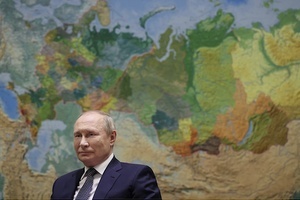
Since 2022 and the beginning of Russia’s full-scale invasion of Ukraine, efforts to negotiate a truce, a ceasefire, an armistice, or a peace settlement have multiplied. Yet none of these initiatives can be taken seriously—not because peace is ever eternal, but because Russia assigns no value to it, owing to a dual political and historical dynamic. First, Russia respects only great powers and the agreements it enters into with them. It relentlessly seeks to be recognized as one itself. Second, it subjugates its weaker neighbors, whom it regards as prey to be devoured and whose sovereignty it fundamentally does not recognize. It systematically undermines their independence and violates any agreement it has signed as soon as any aspect turns unfavorable.
In this framework, international law has no intrinsic value. It is merely one instrument among others used to achieve political objectives. This stance is not specific to Vladimir Putin; it belongs to a centuries-old tradition of the Russian state.
Over the centuries, Russian expansionism in Europe has taken three principal forms: territorial seizure outside the law; the signing and subsequent violation of international agreements; and the political destabilization of targeted neighbors, coupled with opportunistic constitutional claims. Western inaction has implicitly validated this approach.
Territorial seizure outside the law: a longstanding expansionist legacy
Russia has long stopped waiting for legal possession of territory before seizing it. During the Third Russo-Ottoman war (1686–1700), Russia founded the port city of Taganrog in 1698, two years before the Ottoman Empire formally lost the territory in the Treaty of Constantinople. This gave the Russian continental empire access for the first time to a sea that remained ice-free in winter, the Sea of Azov. A similar policy was applied during the Great Northern War against Sweden, from 1700 to 1721. Russia occupied the Swedish region of Ingria from 1702 but only acquired it formally with the Treaty of Nystad in 1721, nineteen years later. Meanwhile, Tsar Peter I founded Saint Petersburg in 1703 and made it the imperial capital in 1712. This fact is particularly striking: Russia’s seat of power stands on land it had not yet legally acquired. The message is equally political and symbolic: Russia will never relinquish this city, regardless of the law.
Brutal annexation applies equally to a region as to a state. Thus, following the Sixth Russo-Ottoman war (1768–1774), the two belligerents signed the Treaty of Küçük Kaynarca, in which they recognized the independence of the Crimean Khanate, previously a vassal of the Ottoman Empire. In reality, however, Russia’s true objective was to seize control of the Tatar lands and their broad coastline along the northern shore of the Black Sea. Empress Catherine II waited nine years, until 1783, before annexing Crimea, thereby reneging on the treaty. That same year, Russia signed the Treaty of Georgievsk with Georgia (then Kingdom of Kartli-Kakheti), under which Russia was tasked with guaranteeing Georgia’s territorial integrity, at a time when Georgia was caught between the Persian and Ottoman empires. In exchange, Georgia ceded control over its foreign policy to its northern neighbor. Yet in 1801, after eighteen years of nominal protection, Russia unilaterally revoked Georgian sovereignty and formally incorporated the kingdom into the empire.
Signature and violation of international agreements
At the end of the First World War (1914–1918) and during the Russian Civil War (1918–1921), the new Bolshevik regime in Moscow signed a series of treaties with its lost possessions, invoking the principles of peace and the right of peoples to self-determination, which it claimed to champion. In reality, it failed to restore the full borders of the Russian Empire. In practice, the regime led by Lenin sought above all to ensure its own survival.
Thus, treaties of peace and mutual recognition were signed in 1920 with Estonia, Finland, Georgia, Latvia, and Lithuania, and in 1921 with Poland. The provisions sometimes went very far in terms of cooperation, good neighborliness, conflict prevention, protection against third-party states, military neutralization, and the Soviet renunciation of all rights dating back to the imperial period. Yet, as early as 1921, one of these treaties was violated by Russia: it invaded and then annexed Georgia, which had been independent since 1918 and had a democratic and progressive constitution.
Despite this tragic Georgian precedent, several newly independent European states continued their policy of signing agreements with the former dominant power. As a result, the Soviet Union signed “non-aggression and peaceful settlement of disputes” pacts with: Lithuania, in 1926 and 1931; Estonia, Finland, Latvia, and Poland, in 1932 and 1934. It also adopted complementary agreements to these peace treaties: border delimitation with Finland in 1922, and with Estonia in 1927; procedures for preventing border conflicts with Poland in 1933; and a “convention on the definition of aggression” with Lithuania, also in 1933.
From 1939 onward, the Soviet Union began a series of treaty breaches followed by annexations. After signing a non-aggression and territorial division pact with National Socialist Germany—known as the Molotov–Ribbentrop Pact—the communist power seized, as planned, the eastern part of Poland during the early days of the Second World War, in September 1939.
A few days later, Estonia, Lithuania, and Latvia chose to enter into an alliance with the devil against the deep blue sea, that is, the Soviet Union against Germany. These three young republics therefore signed mutual assistance pacts: military assistance in the event of aggression, provision of war materiel, establishment of Red Army military bases, and no possibility of alliances with any state that might threaten one of them. And, unsurprisingly, the Georgian scenario of 1921 repeated itself. Despite the recent protection agreements, the three former Russian possessions were attacked and annexed in 1940. During this interval, Finland resisted the Soviet attempt at total reconquest, even though the “land of a thousand lakes” had to cede part of its territory.
Political destabilization and opportunistic constitutional claims
In 1991, Russia’s expansionist ambitions appeared to come to a decisive halt with the recognition of the independence and borders of the fourteen non-Russian Soviet republics. Yet already in 1992, under President Boris Yeltsin, it began undermining its neighbors’ territorial sovereignty through destabilization and legal maneuvering.
In Moldova, since 1992, Russia has stationed troops in the Transnistria region and supports a self-proclaimed breakaway republic. This entity has staged sham referendums seeking annexation by Russia, despite being more than 550 kilometers away as the crow flies.
Around the same period, in Georgia, Russia supported separatism in Abkhazia and South Ossetia, while also waging war there. It deployed “peacekeeping” troops and took advantage of the situation to establish military bases in both regions. The Russo-Georgian War followed in 2008, after which French President Nicolas Sarkozy, in his capacity as rotating President of the European Council, and Russian President Dmitry Medvedev agreed on a security plan supervised by the European Union and applicable to Georgia’s internationally recognized territory, thus including the two separatist regions. But just days later, Russia recognized the independence of Abkhazia and South Ossetia, rendering the plan void.
A similar approach was taken in Ukraine between 2014 and 2022 in Crimea, Donetsk, Kherson, Luhansk, and Zaporizhzhia, but it went further: Russia armed, trained, and directed separatist groups that proclaimed the independence of puppet republics, recognized those same republics, staged sham referenda on joining the federation, and then “accepted” their incorporation. This violated the bilateral Treaty of Friendship, Cooperation and Partnership signed in 1997, under which Russia formally recognized Ukraine’s borders. The treaty was not renewed and expired in 2019. In this respect, the Minsk I and Minsk II agreements signed with Ukraine in 2014 and 2015, which were meant to establish a ceasefire, organize troop withdrawals, and set up autonomy for the Donetsk and Luhansk regions within Ukraine, were merely a façade as far as Russia was concerned.
In 1994, Russia, the United Kingdom, and the United States signed the Budapest Memoranda with Ukraine, Belarus, and Kazakhstan. In return for dismantling their nuclear arsenals, these three states were promised independence, territorial integrity, and protection against attack, whether military or economic. These commitments also applied to the three guarantor powers. Yet Russia went on to wage two “gas wars” against Ukraine in 2005–2006 and 2008–2009: Russia cut off supplies to Ukraine amid disputes over gas prices, unpaid bills, and accusations of theft. Economic aggression was followed by territorial aggression.
In 2014, a constitutional reform marked a new stage in Russia’s territorial history. The Russian Federation amended Article 65 of its Constitution, which provides for the integration or creation of new regions among the “subjects.” It thus established the list of the “constituent entities of the Russian Federation,” which is a federation in name only. It added Crimea as a region and Sevastopol as a federal city, on a par with Moscow and Saint Petersburg. In 2022, it did the same with the regions of Donetsk, Kherson, Luhansk, and Zaporizhzhia, without occupying them in their entirety, allowing Russia to claim, from the standpoint of its own Constitution, that Ukraine occupies part of “its” regions. Russian forces currently occupy only tiny portions of the Ukrainian regions of Kharkiv, Mykolaiv, and Sumy. It would be enough for the Russian authorities to repeat what they did in 2014 and 2022 to claim them formally. They could do the same with any territory in any country, even without occupying it.
Then, as now, the treaties and agreements Russia signs with its neighbors are only a preparatory step toward the future annexation of those territories, once the conditions are in place.
Western Inaction
This chronology, which shows the depth and persistence of Russian intentions, should not obscure the repeated failures and full responsibility of what was until recently called the Western Bloc. Its hallmarks are double standards, democratic proselytism, and a gap between promises and actions toward the countries it claimed to support.
In the 1920s and 1930s, Western states recognized the Soviet Union and signed mutual assistance treaties with it, burying the recognition and support once given to the Georgian government-in-exile (which had taken refuge in France from 1921 onward).
The West never recognized the Soviet annexation of Estonia, Latvia, and Lithuania in 1940, yet this did not prevent bilateral diplomatic and economic cooperation with the communist empire during and after World War II.
In 1941, the UK and the US signed the Atlantic Charter, forbidding territorial conquest or border changes without the peoples’ consent. The Soviet Union signed it as well. Yet at the Tehran Conference in 1943, Churchill and Roosevelt accepted Stalin’s territorial claims over the former European possessions of the Russian Empire. In the case of Poland’s future borders, they even endorsed them. Moreover, in 1975, the West tacitly endorsed Soviet conquests since 1939 in a nonbinding text: in the Helsinki Final Act, the states of the Western and Eastern blocs, meeting in Helsinki, declared their respect for “the territorial integrity of each of the other participating States” and the “inviolability of frontiers” on the continent.
The United Kingdom and the United States of America did not honor their role as guarantors under the 1994 Budapest Memoranda, which remain in force. Moreover, these agreements contain no monitoring or sanction mechanism, either vis-à-vis the signatory states or third parties, which makes them inoperative.
The Russo-Georgian War in 2008 did not prevent the West, despite its public support for Georgia, from continuing to deal with Russia in the years that followed. The economic sanctions imposed on Russia following the brief Crimean war in 2014 and its annexation at Ukraine’s expense did not lead to a break in relations between the West and Russia. Moreover, Germany and France sponsored the two Minsk agreements, in 2014 and 2015, concerning the separatist republics of eastern Ukraine and driven by Russia. These texts are open to criticism, but their violation by both the Ukrainian and Russian sides was tolerated — the French president, François Hollande, even confessed that he had never intended them to be implemented, in order to give Ukraine some breathing space — which once again undermined Europe’s word and its flexibility with respect to international law, which it nevertheless brandishes as an absolute value.
The real turning point finally came with Russia’s full-scale invasion of Ukraine in 2022, when Western countries severed political, cultural, and sporting ties and reduced economic and diplomatic relations with the aggressor. Faced with Russia’s enduring expansionism, the West, and then Europeans, adopted a stance of consistency toward Russia. That, however, means going all the way in supporting Ukrainian sovereignty and that of all European countries bordering Russia.
Measured against the continuity and constancy of the expansionist ambitions of the Tsardom of Russia (1547–1721), the Russian Empire (1721–1917), Soviet Russia/the Soviet Union (1917–1991), and the Russian Federation (since 1991), Europeans are left with three main options if they truly want to protect and ensure the sovereignty and independence of the states and peoples of the continent coveted by their vast neighbor. The first is to support a peace treaty and keep one’s word, in accordance with international law, even at the cost of an inevitable Russian violation. The second is to support a peace treaty and knowingly fail to comply with its terms, given that Russia will do the same, even if this further devalues the promises of European states and undermines their credibility, while also weakening international law. Finally, knowing that Russia is, in reality, negotiating nothing and seeks only to impose its views and will, the last option is to do everything possible to bring it to military defeat and, subsequently, political defeat, while preserving what remains of international law.
Did you enjoy this article? close