Armenia, a concrete test for strategic Europe edit
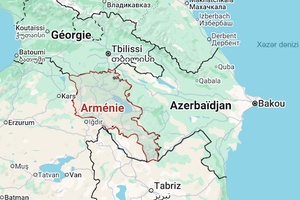
Armenia is forcing France and the European Union to answer a simple question: what is a European policy of sovereignty worth when a small state, long dependent on Russia, is genuinely seeking to free itself from that dependence? Since the loss of Nagorno-Karabakh, Yerevan has not merely been asking for statements of support. It is looking for political guarantees, economic outlets, infrastructure, security tools, and a place in a regional order in which Moscow is no longer able to play the role of protector it long claimed for itself.
Armenia’s 2026 parliamentary elections confirmed this shift. Nikol Pashinyan’s victory does not mean that Armenians have forgotten Nagorno-Karabakh, or that they unreservedly support every direction taken by the government. Rather, it shows that a decisive part of the electorate has drawn a brutal conclusion: the old security model has failed. Russia did not prevent the 2020 war; its peacekeeping forces did not prevent the Azerbaijani offensive of 2023; and the Collective Security Treaty Organization did not provide Armenia with the protection it expected. For a country that had built its security around the Russian alliance, this is a strategic rupture.
France and the European Union have their own interest here, one that goes beyond solidarity with a friendly country. For Paris, Armenia is at once a historical relationship, a diaspora issue, a political partner, and a test of strategic credibility. Armenia hosted the Francophonie Summit in 2018, despite not being a massively French-speaking country, and maintains a singular cultural and political relationship with France. But this relationship cannot rest solely on memory, the diaspora, or sympathy. If Paris wants its engagement to matter, it must be embedded in a European strategy linking security, infrastructure, energy, trade, and institutions.
Armenia will not escape dependence through speeches. Its first vulnerability is security. Yerevan can no longer rely on Moscow as its ultimate guarantor, but the European Union is not NATO, and France cannot substitute itself for a comprehensive defence architecture. Equipment, training, and strategic dialogue give Armenia greater room for manoeuvre. But a credible European policy should also include monitoring, cybersecurity, countering foreign interference, and diplomatic coordination with the United States.
The second vulnerability is geographical. Armenia is semi-blockaded. Its borders with Turkey and Azerbaijan have been closed since the 1990s, making it dependent on Georgia and Iran for much of its land access. Pashinyan’s “Crossroads of Peace” project must be understood in this context. Opening routes with Azerbaijan and Turkey, under Armenian sovereignty, would be an attempt to transform a geography of vulnerability into a geography of transit and interdependence. For Europe, foreign policy becomes concrete here: customs, standards, roads, railways, border security, investment, insurance, and market access.
The third vulnerability is economic. Armenia has experienced strong growth in recent years, visible in Yerevan through construction, services, technology, and consumption. The government points to roads, schools, infrastructure, and state modernisation. But this growth remains uneven. The capital sometimes gives the impression of a country more prosperous than it is in its regions. Poverty, emigration, and territorial disparities remain significant. Pashinyan’s challenge is therefore not only to turn Armenia towards Europe in foreign policy. It is to make that choice socially credible beyond Yerevan.
This is where the European Union can be useful, provided it does not treat Armenia simply as an anti-Russian symbol. The Global Gateway strategy offers a relevant framework because it makes it possible to think together about infrastructure, connectivity, energy, and private investment. But this framework must not remain just a label. For Paris and Brussels, the challenge is to turn political support into concrete capacity: passable roads, better-managed borders, compatible standards, available financing, mobilised expertise, and visible benefits.
Energy illustrates this requirement for realism. The Metsamor nuclear power plant remains central to Armenia’s electricity system, but it is ageing. Its future will involve major choices: extension, a new reactor, small modular reactors, diversification, safety, financing, and technology. Energy diversification could also come through regional electricity interconnections, renewables and, eventually, more diversified gas supplies, including from Azerbaijan if regional normalisation becomes effective. For France and the European Union, technical expertise can become a strategic tool here.
It would be dangerous, however, to tell this story as a linear transition from Russian dependence to European modernity. Armenia remains, for now, a member of the Eurasian Economic Union, even if that membership has become increasingly contradictory with its European rapprochement. Its economy retains links with Russia, and Moscow still has commercial, energy, media, and political levers. Pressure before the elections, including on certain Armenian imports, served as a reminder that Russia has not given up trying to influence Yerevan.
The domestic risk is just as real. Pashinyan’s victory does not solve the problem of Armenian democracy. The opposition is often unconvincing, linked to old networks or too openly pro-Russian to persuade beyond a protest electorate. But this weakness does not give the government a blank cheque. Court cases targeting opponents, accusations of selective justice, polarisation of public debate, and majoritarian temptation must be taken seriously. An Armenia moving away from Moscow does not automatically become a consolidated liberal democracy.
France must also avoid one trap: confusing Armenian politics with diaspora politics. The diaspora is a major diplomatic, cultural, and memorial asset, but it does not vote in large numbers in Armenian elections. Voting abroad is not organised in consulates: to participate, citizens must travel to Armenia. Many French citizens of Armenian origin do not hold Armenian passports, but have roots, memory, and cultural attachments. Seen from Yerevan, the diaspora can therefore be both a resource and a source of irritation: it shapes external representations of Armenia without always bearing the consequences of choices made by the country’s voters.
The French and European interest is clear. Stabilising Armenia is not only about supporting a friendly country. It is about preventing the South Caucasus from being organised exclusively by Russia, Türkiye, Azerbaijan, and Iran. It is about opening a European route towards a pivotal region between the Black Sea, the Caspian, and the Middle East. It also means looking at Armenia as a country with mineral resources - copper, molybdenum, and gold - while avoiding the reproduction of extractivism without environmental and social governance. Finally, it is about showing that Europe can help a vulnerable state diversify its dependencies without locking it into a new asymmetric relationship.
Armenia is not asking Europe to resolve all the contradictions of its recent history. It is implicitly asking for something else: to take seriously the consequences of Europe’s own discourse on geopolitical Europe. If Paris and Brussels want Armenia’s shift not to remain merely a diplomatic moment, they will have to accept going into the details: roads, energy, borders, institutions, justice, regions, and financing. It is in these details that the exit from dependence will, or will not, be decided.
Did you enjoy this article? close