-
12 May 2026
Protecting children’s minds: what the Digital Fairness Act must name

Attentional digital architectures deployed on minors can lead them to die. Europe has the cases, the reports, the legal texts. What it lacks is the doctrine that names the fundamental good these architectures impair. The Digital Fairness Act, which the Commission will table in the fourth quarter of 2026, is its last window to formulate it read more
-
7 April 2026
Europe and the Choice of the Next United Nations Secretary-General
The Secretary-General is the last universally mandated individual voice to demand that power answer to law. If that voice falls silent, it will not be the law that failed the world, but the states that failed the law. read more
-
1 July 2023
Riots in France: anything new since 2005?
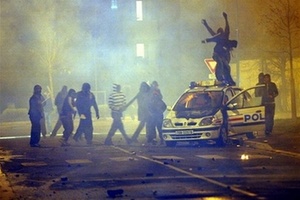
The violence that has erupted in several French communes following the tragic death of young Nahel last Tuesday has come as no surprise to those familiar with the situation. Unfortunately, the factors that were at the root of the 2005 riots are still present. And two novelties make the situation even more difficult to manage. read more
-
21 June 2022
If I wanted to go to there, I wouldn’t start from here
The quote above is an anecdotal story of an Irishman giving an Englishman travel directions… and after twelve years of Conservative led governments I’m not sure that it is an inappropriate summary of how the United Kingdom got to where it is today. Nor am I sure where ‘there’ is either, given the current state of world affairs, continuing Covid issues and post Brexit difficulties. What the UK faces at the moment is a crisis of government at the centre of which are concerns about its leader, Boris Johnson. read more
-
28 December 2021
Nuclear power and natural gas: what lies behind EU inconsistencies?

On December 21, the European Commission has just presented the new “state aid for climate, environmental protection and energy” regime, the main objective of which is to facilitate the achievement of the 2030 and 2050 climate objectives by authorising subsidies for all technologies contributing to the energy transition. However, nuclear power is excluded, while natural gas-based electricity production is covered. Why such an inconsistency? read more
-
6 May 2021
UK: there’s something in the air – and it does not smell too good!
Despite its success with the vaccine campaign, the British government has not really had a good time since the outbreak of the Covid pandemic, nor since the United Kingdom left the European Union, whilst most recently it has found itself mired in a series of damaging leaks about the way in which it conducts its relation with certain business interests. Three areas of activity suggest a government which will not be known by historians for its competence and even its honesty. read more
-
26 June 2020
European funds and southern Italian regions: a critical view
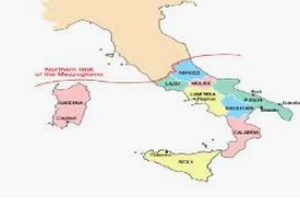
At this stage of the Covid-19 crisis, there is a purpose on the table (among others) to use ordinary European Funds for emergency, without constraints. This is the opportunity to focalize the attention of public opinion in terms of the resources that Europe gives to Southern Italian regions, in particular, due to the fact that they are unable to spend. read more
-
9 May 2020
Eurozone auf Wiedersehen?
With its recent ruling on the EBC's QE programm, the German Federal Constitutional Court just crossed the Rubicon and for the first time ever nullifies action by an EU institution (the ECB) which had been declared fully legal by another EU institution (the ECJ) – and on the basis of economic arguments on which it has no expertise. It now remains to be seen what will happen. read more
-
4 February 2019
The European way of designing smart cities

Though often regarded as more advanced than their American counterparts in both design and implementation of innovative models, European cities face specific issues that challenge the very notion of “smart city.” Is it possible for a data-driven city to preserve the delicate mix of rational and irrational that seems to define the European urban experience? read more
-
19 July 2018
Drowning, not waving: the UK and Brexit
So far Mrs May has been able to hold her party together – there currently seems to be no desire for a leadership challenge from those dissatisfied with her proposals, and there is no readily apparent leader in waiting. A challenge may come later in the year, especially if the government is seen as making any further concessions to the EU. Meanwhile preparations for a No Deal outcome are under consideration. Thus, the British government is not quite drowning and is certainly not waving. But its boat is certainly unstable. read more
-
23 May 2018
Fiscal money as a solution to Italian eurowoes
As fiscal rules constrain Italy’s ability to reflate demand by issuing debt, and with monetary policy being as accommodative as it gets, an alternative instrument is required. Fiscal Money provides such instrument. Our proposal is for government to issue transferable and negotiable bonds, which bearers may use for tax rebates two years after issuance. read more
-
17 January 2018
Réconcilier solidarité et discipline de marché dans la zone euro
La zone euro goûte enfin au bonheur d’une reprise robuste. La tentation est forte pour les responsables politiques de baisser la garde. Ce serait une grave erreur car la monnaie unique reste vulnérable. Quatorze économistes français et allemands, considérant que la polarisation du débat entre solidarité (entre États membres) et responsabilité (au niveau de chacun d’entre eux) constitue une fausse alternative, proposent six réformes… read more
-
11 March 2016
Boris Johnson, tea bags and the complexity of law
Boris Johnson, in his plea for Brexit, develops the familiar theme of excess of niggling and stupid standards coming from Brussels. But the proliferation of legal texts is not to be blamed on the European Union. It reflects the tensions between conflicting aspirations of a complex society, the demand for ever greater security and the refusal of any hazard. read more
-
23 November 2011
Can Technocratic Government be Democratic?

The resignations of Papandreou in Greece and Berlusconi in Italy, replaced by technocratic governments, have raised questions about the democracy of technocracy. These questions only gain in intensity when we add the EU Commission’s increasing powers of surveillance of member states’ national budgets, let alone those of the Troika (IMF, European Central Bank, and EU Commission) when it comes to eurozone member states that have had recourse to loan bailouts (Greece) or to the European Financial Stability Facility (EFSF). The answers to such questions are mixed. Berlusconi's replacement with a technocratic government—precipitated primarily by global market pressures—may actually be a sign of democracy at work. Papandreou's replacement—precipitated by the pressures of the eurozone powers and Papandreou’s own ill-advised gamble on ‘direct democracy’—depends upon how things play themselves out. As for the technocratic governance of the EU, this is where the democracy deficit may be greatest. read more
-
12 April 2011
The trouble with the European Stability Mechanism

The meeting of the European Council on 24-25 March focused on shoring up the battered Eurozone infrastructure through the European Stability Mechanism. This column argues that the mechanism is seriously flawed. It says it is unlikely to withstand the shock of a severe financial crisis and may even spread the damage to high-debt countries, while leaving the Eurozone in the grip of paralysing vetoes. (in French; English version available on VoxEU) read more
-
5 November 2010
EU: tax harmonization in sight?

Led by EU Commissioner Algirdas Šemeta, the new Tax Policy Group brings together personal representatives of EU Finance Ministers to discuss key tax policy issues. The Group aims to work on fundamental topics such as how taxation can contribute to a stronger Internal Market, to the growth and competitiveness of Europe's economy and to a "greener" economy. It will also serve as a forum for deeper discussion on priority matters, such as financial sector taxation, common consolidated corporate tax base and the new VAT Strategy. What are the prospects for tax harmonization? (in French) read more
-
29 September 2010
EU: new ways of the small and middle economies

A quick trip through the Czech Republic, Sweden, Slovakia and Poland offers curious impressions of economic situation. All these countries are seeing a fast economic recovery of around 4 percent this year, and the contrast could hardly be greater to the current US depressed mood. Unemployment is the main concern but bubbles are on their way. One can also wonder about the policies carried in these countries whose leaders speak a new language. read more
-
22 September 2010
‘Roma crisis’ and EU’s neighborhood

In a spectacular move, France, a founding member State, has been sharply criticized by European MPs over its Roma expulsion policy. Since the beginning of the crisis, President Sarkozy is standing firm on its tough immigration policy, in spite of a wave of criticisms both within France and abroad. Starting as a French issue, it has had an impact on the French-Romanian relations, two traditional allies. At a European level, it may be not without serious implications for a country like Ukraine, which seeks a prospect of integration within the EU. (in French) read more
-
19 July 2010
EU economic governance needs more democracy

May 2010 will go down in history as the beginning of greater economic solidarity in the European Union as a result of the one-two punch of the Greek loan agreed on May 3 and the massive loan guarantee mechanism of May 9-10. But what shape that union will take remains unclear. German Chancellor Merkel wants more governance by rules, to enshrine restrictive budgetary discipline and draconian punishments for violators. French President Sarkozy wants more governance by leaders, with Eurozone countries to form a kind of economic government that determines Eurozone policy on an on-going basis. Neither will work, the first because it is too rigid as well as economically problematic, the second because it is too flexible as well as politically problematic. Neither, moreover, is very democratic. read more
-
16 July 2010
EU: let's create independent, national budget committees

The sovereign debt crisis revealed the institutional weaknesses of fiscal policies in Europe. To an institutional weakness, it must be given an institutional response. How? We propose the creation of independent, national budget committees, as well as a European committee that would evaluate, on the basis of the information provided by the national committees, the impact of national fiscal policies for the Eurozone. Comparable to the European organization of competition or financial regulation, such an architecture would preserve national sovereignty in fiscal policies while offering a European diagnosis on the economic policy. (in French) read more
-
Page 1 of 2 1 2