-
May 6, 2025
Is this autocracy?

“Is this autocracy?” one European journalist asked me a few days ago. “Can we use the word ‘fascism’?” asked another. I’ve been answering the latter question for most of a decade now; and my answer has been yes, we can—with the caveat that I would avoid fetishizing these categories. No historical situation is ever exactly the same as any other. At the present moment, “fascism” has felt most useful with respect to both my own country, the United States, and Russia. It would benefit, though from a modifier—“neo” for instance—to suggest the postmodern, “post-truth” version in distinction to 20th century forms. read more
-
March 4, 2025
“The very definition of tyranny”: Donald Trump’s attempted coup

The flood of authoritarian measures—many, illegal or unconstitutional; others, while legal, nonetheless an assault on political norms of restraint and on progressive political, economic, and social reforms adopted since the New Deal—should not obscure their central aim: the accumulation of all powers that is, an attempted coup d’état to undermine American democracy. read more
-
Feb. 19, 2025
Blame it on the trade deficit! Misconceptions about a complex macroeconomic concept

The concept of a trade deficit is often negatively connoted and distorted by approximate, erroneous or contradictory conceptions. It is obviously complicated to explain to a wide public that imports are necessary for the proper functioning of an economy, that a trade deficit can result from a phase of prosperity and that tariffs can only effectively reduce a deficit at the cost of a recession. read more
-
Jan. 10, 2025
Trump the Second: from the Imperial Presidency to the Imperiled Republic

How dangerous will Donald M. Trump’s second term be? This article claims that he is seeking to undermine the fundamental elements of American government created by the Constitutional Convention in 1787 and poses the greatest threat to America’s republican system of government since the Civil War of 1861-65. read more
-
Dec. 16, 2024
A President and customs duties: is a major trade conflict imminent?

Candidate Trump promised during the 2024 campaign to increase tariffs by 60% on all Chinese products and by 10 to 20% on all products from the rest of the world. Should we expect major commercial conflicts? Or is the social networking fuss just tactical positioning? The potential consequences of the proposed policy provide some useful clues. read more
-
Nov. 21, 2024
The significance of Trump's victory
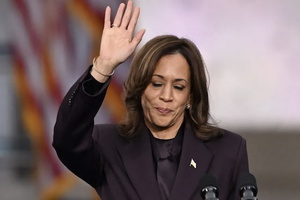
Any Democratic Party candidate would have faced a daunting challenge in 2024. Political scientists have found that the two most reliable indicators of an incumbent party’s chance for re-election are voters’ evaluation of whether the country is going in the right direction, and whether voters judge that they are better off today than in the past. Still, despite the substantial odds against a Harris victory, the election was extremely close. read more
-
July 24, 2023
Memorial: War of Memories

Memorial, Nobel Peace Prize 2022 shared with Ales Bialiatski, Belarusian human rights activist in prison, and the Ukrainian Center for Civil Liberties, has been witnessing since 1991 all the upheavals of civil society in Russia and its former empire. read more
-
July 4, 2023
Kazakhstan, the imperative to cooperate
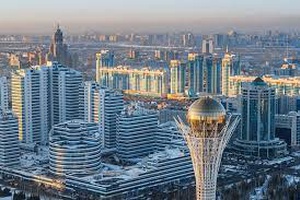
Landlocked in the heart of Central Asia, Kazakhstan is involved in regional partnerships and, pragmatic, claims to be a facilitator with balanced relations, even if the pressure to take a stand between Russia, China and the European Union is strong. This cocktail is the challenge of so-called middle power (or bridge) countries, developing multi-factor diplomacy, here constrained by geography and made possible by the country’s resources. Moreover, the development and identity of the five Central Asian countries are built around the imperative of cooperation, given the geographical position and the small number of citizens (75 million for the five countries). read more
-
July 1, 2023
Riots in France: anything new since 2005?

The violence that has erupted in several French communes following the tragic death of young Nahel last Tuesday has come as no surprise to those familiar with the situation. Unfortunately, the factors that were at the root of the 2005 riots are still present. And two novelties make the situation even more difficult to manage. read more
-
Oct. 25, 2022
Stalemate or reaction? The Midterm Elections and their discontents
How will the Republican Party use its new-found power if, as is near-certain, it gains control of one or both houses of Congress in the November midterm elections. Common wisdom about the American system of separated powers holds that divided control of Congress and the presidency produces stalemate, a freezing of the status quo. I suggest, on the contrary, that the result will be substantial: Republicans will use their congressional power not simply to block presidential initiatives but to reshape American politics and policy in reactionary, ultra-rightist, and anti-democratic directions. read more
-
June 21, 2022
If I wanted to go to there, I wouldn’t start from here
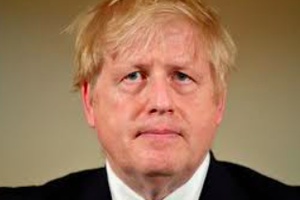
The quote above is an anecdotal story of an Irishman giving an Englishman travel directions… and after twelve years of Conservative led governments I’m not sure that it is an inappropriate summary of how the United Kingdom got to where it is today. Nor am I sure where ‘there’ is either, given the current state of world affairs, continuing Covid issues and post Brexit difficulties. What the UK faces at the moment is a crisis of government at the centre of which are concerns about its leader, Boris Johnson. read more
-
Dec. 28, 2021
Nuclear power and natural gas: what lies behind EU inconsistencies?

On December 21, the European Commission has just presented the new “state aid for climate, environmental protection and energy” regime, the main objective of which is to facilitate the achievement of the 2030 and 2050 climate objectives by authorising subsidies for all technologies contributing to the energy transition. However, nuclear power is excluded, while natural gas-based electricity production is covered. Why such an inconsistency? read more
-
May 25, 2021
Europe vs. America: the federal governance matters

Europe and America have been strikingly different in terms of the Corona-era big-relief packages, and the roll out of Covid-19 vaccination. These differences are rooted in differences in their federal governance. Governance differences in the federal system matters also for migrants skill composition, tax burden, and the generosity of the welfare state. read more
-
May 6, 2021
UK: there’s something in the air – and it does not smell too good!
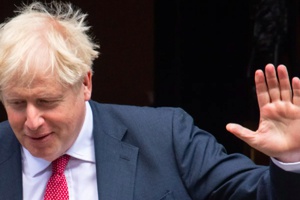
Despite its success with the vaccine campaign, the British government has not really had a good time since the outbreak of the Covid pandemic, nor since the United Kingdom left the European Union, whilst most recently it has found itself mired in a series of damaging leaks about the way in which it conducts its relation with certain business interests. Three areas of activity suggest a government which will not be known by historians for its competence and even its honesty. read more
-
Feb. 24, 2021
Africa’s food security requires accurate trade statistics

Africa’s trade flows, particularly in the agriculture and food products sector, are known to be very underestimated, suggesting there is a considerable margin of error. This greatly hampers the continent's governments in making policies for food security. Yet some improvements are in sight. A well-structured partnership between private operators, apex organizations, national statistical institutes, and international institutions can make an important contribution to improving Africa’s international trade statistics. read more
-
Feb. 16, 2021
Claims of electoral fraud are as American as apple pie
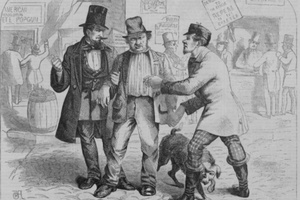
For a non-American observer, US presidential elections can be quite surprising. On top of a system of Electors and swing states, voting by mail or without a voter ID seems an open door for fraud. But claims of electoral fraud are nearly as ancient as the US democracy, and point to the conflicting views of many voters towards immigration and minorities. Federalism prevents any harmonization across states. read more
-
Jan. 20, 2021
Facebook, Twitter, ending the hypocrisy

Can Twitter and Facebook still say, after censoring the President of the United States, that they have no editorial responsibility for the content they publish? To ask the question is to answer it. This calls for enhancing regulation. But how? read more
-
June 26, 2020
European funds and southern Italian regions: a critical view
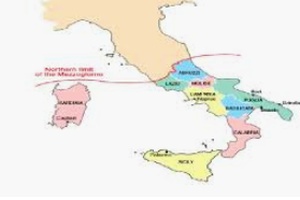
At this stage of the Covid-19 crisis, there is a purpose on the table (among others) to use ordinary European Funds for emergency, without constraints. This is the opportunity to focalize the attention of public opinion in terms of the resources that Europe gives to Southern Italian regions, in particular, due to the fact that they are unable to spend. read more
-
June 25, 2020
Post Covid-19 economy: state capitalism with expiration date

Public spending is bound to intensify over the coming months and even years. Increased spending will undoubtedly go hand-in-hand with increased scrutiny and demand for fiscal discipline. An old ally – the SWF – might indeed be governments’ best hope in balancing public responsibility with private interests in a post-pandemic economy. read more
-
June 24, 2020
COVID-19 in developing countries: whatever it takes?

Latin American and African countries, in particular those that are more connected to the world economy, are already experiencing the economic impact: collapse in commodity prices, falling tourists’ revenues, drop in remittances, massive capital outflows. There is need for a global and effective response to the virus. read more