-
29 May 2026
The words of Putinism

Two books have just been published in quick succession to help us decipher the language of Putinism. Michel Niqueux, a Russian translator and Professor Emeritus of Russian Literature and Civilization at the University of Caen, offers a Vocabulaire du poutinisme (Vocabulary of Putinism, Éditions À l’Est de Brest-Litovsk, 2025). While this work builds on his broader reflections on Russia, it stands apart through its concise style aimed at the general public. The other publication is Louis Arcueil’s Au nom du père (In the Name of the Father, Éditions Tourgueneff, 2026). It places Putin’s words into a broader theoretical framework. In the tradition of new Russian despotism, this time Putin appears as a paradoxical figure, though not entirely unprecedented. read more
-
19 May 2026
Why Russia never abides by agreements with its neighbors
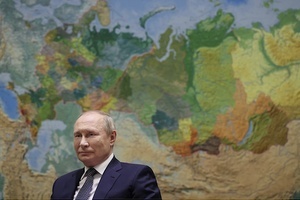
Since 2022 and the beginning of Russia’s full-scale invasion of Ukraine, efforts to negotiate a truce, a ceasefire, an armistice, or a peace settlement have multiplied. Yet none of these initiatives can be taken seriously—not because peace is ever eternal, but because Russia assigns no value to it, owing to a dual political and historical dynamic. First, Russia respects only great powers and the agreements it enters into with them. It relentlessly seeks to be recognized as one itself. Second, it subjugates its weaker neighbors, whom it regards as prey to be devoured and whose sovereignty it fundamentally does not recognize. It systematically undermines their independence and violates any agreement it has signed as soon as any aspect turns unfavorable. read more
-
12 May 2026
Protecting children’s minds: what the Digital Fairness Act must name

Attentional digital architectures deployed on minors can lead them to die. Europe has the cases, the reports, the legal texts. What it lacks is the doctrine that names the fundamental good these architectures impair. The Digital Fairness Act, which the Commission will table in the fourth quarter of 2026, is its last window to formulate it read more
-
7 April 2026
Europe and the Choice of the Next United Nations Secretary-General
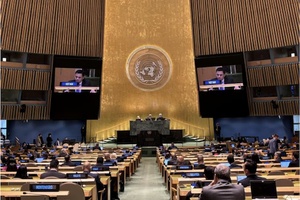
The Secretary-General is the last universally mandated individual voice to demand that power answer to law. If that voice falls silent, it will not be the law that failed the world, but the states that failed the law. read more
-
28 January 2026
Despotism in America
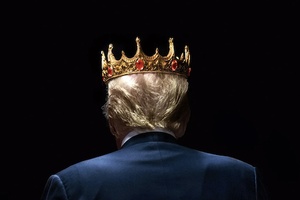
As July 4, 2026, approaches, the United States will both celebrate the 250th anniversary of the Declaration of Independence and experience its gravest political crisis since the Civil War. In barely a year since Donald J. Trump regained power, he and his allies have brazenly violated centuries-old Constitutional dictates, laws, and norms with impunity. How could he have accomplished this unprecedented feat so quickly and with so little resistance? read more
-
5 December 2025
Playing the long game: China’s space strategy
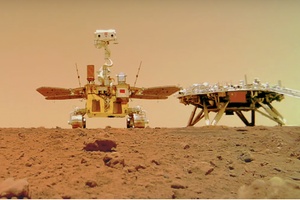
China stands at the forefront of a rapidly shifting global landscape shaped by Critical and Emerging Technologies (CETs) and by the accelerating commercialisation of space. As nations around the world compete for leadership in advanced technologies—from AI and quantum systems to autonomous vehicles and space platforms—China has articulated and deployed a comprehensive strategy designed to secure its position as a dominant space power. read more
-
27 November 2025
The geopolitical risks of artificial intelligence

The Cold War of the 21st century is not about fighting over territories, but about controlling the artificial intelligence systems that organize the global economy, security, and information. read more
-
6 May 2025
Is this autocracy?
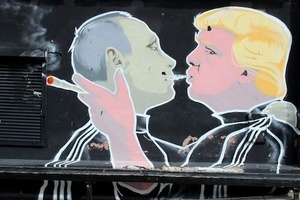
“Is this autocracy?” one European journalist asked me a few days ago. “Can we use the word ‘fascism’?” asked another. I’ve been answering the latter question for most of a decade now; and my answer has been yes, we can—with the caveat that I would avoid fetishizing these categories. No historical situation is ever exactly the same as any other. At the present moment, “fascism” has felt most useful with respect to both my own country, the United States, and Russia. It would benefit, though from a modifier—“neo” for instance—to suggest the postmodern, “post-truth” version in distinction to 20th century forms. read more
-
4 March 2025
“The very definition of tyranny”: Donald Trump’s attempted coup
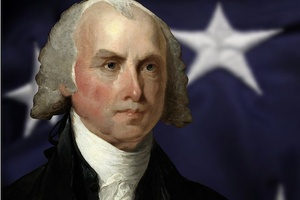
The flood of authoritarian measures—many, illegal or unconstitutional; others, while legal, nonetheless an assault on political norms of restraint and on progressive political, economic, and social reforms adopted since the New Deal—should not obscure their central aim: the accumulation of all powers that is, an attempted coup d’état to undermine American democracy. read more
-
19 February 2025
Blame it on the trade deficit! Misconceptions about a complex macroeconomic concept
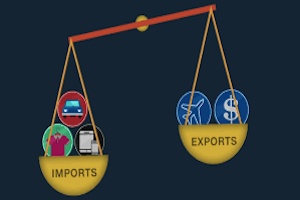
The concept of a trade deficit is often negatively connoted and distorted by approximate, erroneous or contradictory conceptions. It is obviously complicated to explain to a wide public that imports are necessary for the proper functioning of an economy, that a trade deficit can result from a phase of prosperity and that tariffs can only effectively reduce a deficit at the cost of a recession. read more
-
10 January 2025
Trump the Second: from the Imperial Presidency to the Imperiled Republic

How dangerous will Donald M. Trump’s second term be? This article claims that he is seeking to undermine the fundamental elements of American government created by the Constitutional Convention in 1787 and poses the greatest threat to America’s republican system of government since the Civil War of 1861-65. read more
-
16 December 2024
A President and customs duties: is a major trade conflict imminent?
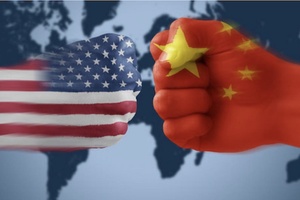
Candidate Trump promised during the 2024 campaign to increase tariffs by 60% on all Chinese products and by 10 to 20% on all products from the rest of the world. Should we expect major commercial conflicts? Or is the social networking fuss just tactical positioning? The potential consequences of the proposed policy provide some useful clues. read more
-
24 July 2023
Memorial: War of Memories
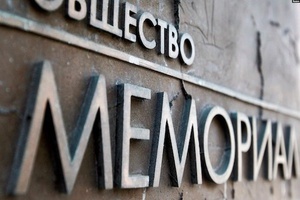
Memorial, Nobel Peace Prize 2022 shared with Ales Bialiatski, Belarusian human rights activist in prison, and the Ukrainian Center for Civil Liberties, has been witnessing since 1991 all the upheavals of civil society in Russia and its former empire. read more
-
4 July 2023
Kazakhstan, the imperative to cooperate
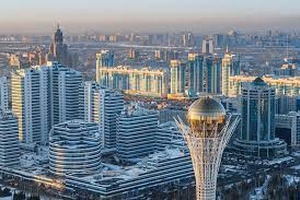
Landlocked in the heart of Central Asia, Kazakhstan is involved in regional partnerships and, pragmatic, claims to be a facilitator with balanced relations, even if the pressure to take a stand between Russia, China and the European Union is strong. This cocktail is the challenge of so-called middle power (or bridge) countries, developing multi-factor diplomacy, here constrained by geography and made possible by the country’s resources. Moreover, the development and identity of the five Central Asian countries are built around the imperative of cooperation, given the geographical position and the small number of citizens (75 million for the five countries). read more
-
19 July 2018
Drowning, not waving: the UK and Brexit
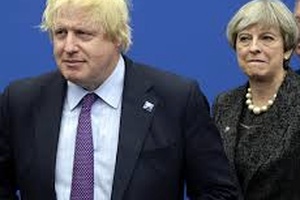
So far Mrs May has been able to hold her party together – there currently seems to be no desire for a leadership challenge from those dissatisfied with her proposals, and there is no readily apparent leader in waiting. A challenge may come later in the year, especially if the government is seen as making any further concessions to the EU. Meanwhile preparations for a No Deal outcome are under consideration. Thus, the British government is not quite drowning and is certainly not waving. But its boat is certainly unstable. read more
-
29 November 2011
Is Asia afraid of China?
At the 6th East Asian Summit in Bali on 19th November the Chinese Premier, Wen Jiabao, found himself the butt of almost universal criticism from the leaders of the ten-member Association of Southeast Asian Nations (ASEAN) both for Chinese territorial claims and recent provocative actions in the South China Sea. Supported by the United States as well as India, Australia and Japan, the ASEAN countries insisted on multilateral negotiations over these questions, while the Chinese remained firm on the principle of bilateral solutions in which they would have a distinct asymmetrical advantage. read more
-
26 November 2011
Strategic Games around Free Trade Agreements in the Asia-Pacific

Barely a week after the G20 in Cannes, ten of the 20 leaders reconvened half way across the world in Honolulu as part of the annual summit of the Asia-Pacific Economic Cooperation forum (APEC), together with other Pacific Rim leaders. APEC summits are usually quiet and polite affair. This time, however, APEC became the scene of great diplomatic games and one more match in the growing strategic rivalry between China and US. Indeed, the US decided to use APEC as platform for strategic reengagement into Asia and balancing China’s growing dominance. This game may well be the one with the most significance for the future of the world economy. read more
-
31 March 2011
The Libyan Intervention in the Rear View Mirror

When we look back on the Libyan intervention, will we think of it as another Rwanda, another Somalia, or something else entirely? ‘Rwanda’ reminds us of the shame of inaction, ‘Somalia’ reminds of the costs of poorly executed action, and ‘something else’ stands for the promise of doing the right thing. read more
-
22 September 2010
‘Roma crisis’ and EU’s neighborhood

In a spectacular move, France, a founding member State, has been sharply criticized by European MPs over its Roma expulsion policy. Since the beginning of the crisis, President Sarkozy is standing firm on its tough immigration policy, in spite of a wave of criticisms both within France and abroad. Starting as a French issue, it has had an impact on the French-Romanian relations, two traditional allies. At a European level, it may be not without serious implications for a country like Ukraine, which seeks a prospect of integration within the EU. (in French) read more
-
16 September 2010
Iraq: US troops leave, violence remains

Since August 31, there are no more U.S. combat forces in Iraq. However the complete drawdown of U.S. troops won't occur before December 2011. In Baghdad, Prime Minister Nuri al-Maliki said he was confident in the ability of Iraq’s new security forces to take the lead, adding that he was delighted by Iraq’s recovery of « its independence and sovereignty. » But does this guarantee the return to stability and the end of violence? This is far from certain. read more
-
Page 1 of 2 1 2