-
5 December 2025
Playing the long game: China’s space strategy
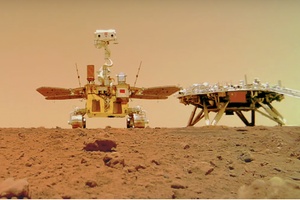
China stands at the forefront of a rapidly shifting global landscape shaped by Critical and Emerging Technologies (CETs) and by the accelerating commercialisation of space. As nations around the world compete for leadership in advanced technologies—from AI and quantum systems to autonomous vehicles and space platforms—China has articulated and deployed a comprehensive strategy designed to secure its position as a dominant space power. read more
-
19 February 2025
Blame it on the trade deficit! Misconceptions about a complex macroeconomic concept
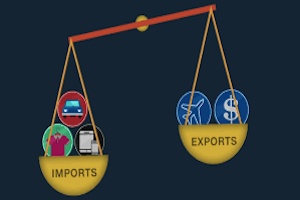
The concept of a trade deficit is often negatively connoted and distorted by approximate, erroneous or contradictory conceptions. It is obviously complicated to explain to a wide public that imports are necessary for the proper functioning of an economy, that a trade deficit can result from a phase of prosperity and that tariffs can only effectively reduce a deficit at the cost of a recession. read more
-
16 December 2024
A President and customs duties: is a major trade conflict imminent?
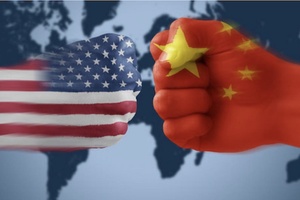
Candidate Trump promised during the 2024 campaign to increase tariffs by 60% on all Chinese products and by 10 to 20% on all products from the rest of the world. Should we expect major commercial conflicts? Or is the social networking fuss just tactical positioning? The potential consequences of the proposed policy provide some useful clues. read more
-
4 July 2023
Kazakhstan, the imperative to cooperate
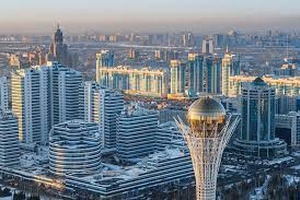
Landlocked in the heart of Central Asia, Kazakhstan is involved in regional partnerships and, pragmatic, claims to be a facilitator with balanced relations, even if the pressure to take a stand between Russia, China and the European Union is strong. This cocktail is the challenge of so-called middle power (or bridge) countries, developing multi-factor diplomacy, here constrained by geography and made possible by the country’s resources. Moreover, the development and identity of the five Central Asian countries are built around the imperative of cooperation, given the geographical position and the small number of citizens (75 million for the five countries). read more
-
24 February 2021
Africa’s food security requires accurate trade statistics
Africa’s trade flows, particularly in the agriculture and food products sector, are known to be very underestimated, suggesting there is a considerable margin of error. This greatly hampers the continent's governments in making policies for food security. Yet some improvements are in sight. A well-structured partnership between private operators, apex organizations, national statistical institutes, and international institutions can make an important contribution to improving Africa’s international trade statistics. read more
-
19 July 2018
Drowning, not waving: the UK and Brexit
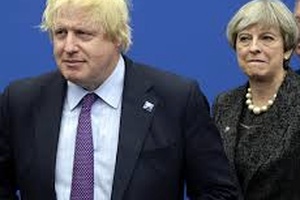
So far Mrs May has been able to hold her party together – there currently seems to be no desire for a leadership challenge from those dissatisfied with her proposals, and there is no readily apparent leader in waiting. A challenge may come later in the year, especially if the government is seen as making any further concessions to the EU. Meanwhile preparations for a No Deal outcome are under consideration. Thus, the British government is not quite drowning and is certainly not waving. But its boat is certainly unstable. read more
-
30 March 2016
Protect or innovate? Of Marseille Soap and other traditional products

How to protect non-food products which are emblematic of a geographical area? The European Commission is working on the extension of both protected designation of origin (PDO) and protected geographical indication (PGI) system for non-agricultural products. What are the challenges? Is such a regulation adapted? read more
-
29 November 2011
Is Asia afraid of China?
At the 6th East Asian Summit in Bali on 19th November the Chinese Premier, Wen Jiabao, found himself the butt of almost universal criticism from the leaders of the ten-member Association of Southeast Asian Nations (ASEAN) both for Chinese territorial claims and recent provocative actions in the South China Sea. Supported by the United States as well as India, Australia and Japan, the ASEAN countries insisted on multilateral negotiations over these questions, while the Chinese remained firm on the principle of bilateral solutions in which they would have a distinct asymmetrical advantage. read more
-
26 November 2011
Strategic Games around Free Trade Agreements in the Asia-Pacific
Barely a week after the G20 in Cannes, ten of the 20 leaders reconvened half way across the world in Honolulu as part of the annual summit of the Asia-Pacific Economic Cooperation forum (APEC), together with other Pacific Rim leaders. APEC summits are usually quiet and polite affair. This time, however, APEC became the scene of great diplomatic games and one more match in the growing strategic rivalry between China and US. Indeed, the US decided to use APEC as platform for strategic reengagement into Asia and balancing China’s growing dominance. This game may well be the one with the most significance for the future of the world economy. read more
-
18 February 2011
The fog of currency war
One way to expose the economic mumbo-jumbo that is applied to the Chinese exchange rate by otherwise respectable economists is to look at it from the perspective of Germany and international trade. China-bashers, who from stuttering economies lecture those who have presided over the biggest economic miracle that has occurred without thieving foreign lands or labour, like to focus on current account imbalances. A better measure of competitiveness would be the trade account. The current account includeshot money inflows that come under the exchange control restrictions and have ballooned since the China-bashers created the belief that the renimbi is a one-way appreciation bet. Chinas annual trade surplus with the world was $184.5bn at the end of 2010 or 3.6% of GDP. More than ten significant economies have a larger trade surplus as a percent of GDP than China. Natural-resource-poor Germany is the most interesting analogy and it has the largest 12-month trade surplus in dollar terms in the world: $205.4bn or 6.0% of GDP. (in French) read more
-
18 March 2009
The WTO’s transparency challenge
Multilateral liberalization has often been described as a bicycle that has to keep moving to maintain stability. Undeniably, the bicycle has come to a standstill: as the Doha Round drags on since 2001 with little result, countries have worked off their liberalization commitments from the Uruguay Round (1986-94) and face few incentives to reform their policies in preparation of new WTO obligations. read more
-
13 October 2007
The French Mark on Globalization

On September 28, Dominique Strauss-Kahn became the new Managing Director of the International Monetary Fund. He follows in the footsteps of his French predecessors, Pierre-Paul Schweitzer (1963-1973), Jacques de la Rosière (1979-1987) and Michel Camdessus (1987-2000). Indeed, French bureaucrats have led the IMF for almost half of its existence. Look beyond 19th Street, and you will find the mark of Frenchmen in many more of the world's most influential economic organizations, from Pascal Lamy, who has been Director General of the World Trade Organization since 2005, to Jean-Claude Trichet, who has headed the European Central Bank since 2003. read more
-
11 January 2007
Europe Needs Policies on Russia and Energy
A year ago, the European Union was at a loss when Russia cut gas supplies to Europe through Ukraine and thus to Europe. Exactly one year later, Russia cuts oil supplies to Europe through Belarus, and the EU is equally lost. Seldom haws Russia so clearly displayed its principles. It is time for the EU to adopt policies on both Russia and energy. Otherwise, the cost of Europe's disorientation may grow exponentially. -->Russia is a market economy, and even its state sector is highly commercialized. In the last few years, the Kremlin has successfully focused on boosting the price of Gazprom stocks, rendering it the third most valuable publicly traded company in the world. Part of this endeavor has been to abolish political subsidies to friendly former Soviet republics and let gas and oil prices approach market prices. Belarus was the last country to enjoy oil subsidies from Russia, and now they are gone. read more
-
22 November 2006
Europe and Chindia
Overseas acquisitions by Indian companies have suddenly gone on top gear. In the first nine months of 2006, there were 112 foreign acquisitions by Indian companies with a combined deal value of $7.2 billion. Last year it was $4.5 billion, which was itself several times more than the figure for 2004. What is triggering this surge, why now, and why it should worry the Europeans? -->Let us examine the combination of the four factors which seems to interplay in this sharp turnaround: read more
-
13 November 2006
America Votes: What next for the WTO?
The Doha Round of trade negotiations was suspended in July 2006. Soon thereafter leading trade negotiators hoped that talks could resume -even be completed- in early 2007. This timetable allowed for a short "cooling off" period but, more importantly, envisaged the resumption of negotiations after the U.S. Congressional elections. These elections were thought to be one factor stopping American negotiators from making further concessions on agricultural trade subsidies during 2006. Well, the elections have now come and gone but will we see the resumption and conclusion of the WTO's Doha Round negotiations? read more
-
15 September 2006
Democracy and Globalization
Democratization and globalization are the two most profoundly important developments of our age. Since 1975 there has a quadrupling in the number of democratic countries worldwide. Meanwhile, global trade as a share of global GDP has more than doubled from 8 to 20 per cent, while the share of countries fully open to international capital flows, as measured by the International Monetary Fund, has risen by half, from 25 to 38 per cent. There are exceptions; North Korea remains a hermit kingdom, resisting both democracy and globalization. But such exceptions are increasing few. It is hard to think of a part of the globe that is untouched by these powerful trends. And it is hard to think of an aspect of our lives that is unaffected. read more
-
6 June 2006
ALCA versus ALBA
The decision by Bolivia to nationalize its natural gas and petroleum industries is going to result in heavy losses for Brazil, but it also shows that populism and contract breaches continue to be an "easy way out" for Latin America to justify its refusal to introduce much needed reforms. Nations in the region tend to periodically succumb to the temptation of using their vast natural resources to reach political objectives. read more
-
30 May 2006
WTO: the true cost of a non agreement
For many commentators, the puzzling issue is no longer " how to save the Doha Development Round ", but " should we save the Round ? ". The departure of Rob Portman, the apparently irreconcilable positions, as well as the increasing concerns with regards to the usefulness of these negotiations, fuel a growing pessimism. Two options can be contemplated at this stage, after having missed the April deadline. The first option is to take advantage of the pressure associated with the forthcoming elections in Brazil, the U.S. or France, in order to conclude in emergency; the alternative is to miss this target, and to start a new process on the basis of new premises; the latter option would hardly put at risk a buoyant world trade. There is however a risk associated to such postponement recently suggested by Oxfam. There is a high probability of getting stuck in the sand, the delegations entering into a trench warfare where every lost centimetre is perceived as a major defeat. read more
-
15 May 2006
Energy Supply and Energy Security: a Mexican Perspective
Oil prices have almost doubled in the past two years. After having breached the 75 dollar a barrel threshold for brief periods the market seems ready to test a price of 80 dollars for WTI, while global demand continues to grow. Future prices on the NYMEX are currently above 70 dollars until December of 2012. Yesterday the far dated quotes reached a new record. Refining margins have remained high and the average retail price of gasoline in the US should be higher this summer than last year. Prices are reflecting multiple constraints and imbalances along all of the supply chain. Capacity increases will be limited for at least the next three years, both in the upstream and in the downstream. More important, the oil service sector as well as construction and engineering companies are not able to meet their costumers' requirements. The resulting cost inflation is contributing to a shift of oil industry supply curves. read more
-
2 April 2006
Why the European Energy Charter Needs Revision
Russia has chosen energy security as the dominant theme for the summit of the G-8 in St. Petersburg in mid-June. This is a good choice. At present, world demand of oil is almost at 85 million barrells a day. Pessimists argue that world oil production is at its peak, while optimists suggest that in 2020 global output can rise to 105 million barrells a day, but that is only slightly more. -->As the supplier of one-fifth of the world's production of natural gas and one-ninth of its crude oil, Russia does play a key role. Its position is all the more important in Europe, where it is the dominant energy supplier. Both because of energy efficiency and environmental reasons, Europe is increasingly turning to natural gas, rendering Russia even more significant. read more
-
Page 1 of 2 1 2