-
25 June 2020
Post Covid-19 economy: state capitalism with expiration date

Public spending is bound to intensify over the coming months and even years. Increased spending will undoubtedly go hand-in-hand with increased scrutiny and demand for fiscal discipline. An old ally – the SWF – might indeed be governments’ best hope in balancing public responsibility with private interests in a post-pandemic economy. read more
-
24 June 2020
COVID-19 in developing countries: whatever it takes?

Latin American and African countries, in particular those that are more connected to the world economy, are already experiencing the economic impact: collapse in commodity prices, falling tourists’ revenues, drop in remittances, massive capital outflows. There is need for a global and effective response to the virus. read more
-
18 February 2011
The fog of currency war
One way to expose the economic mumbo-jumbo that is applied to the Chinese exchange rate by otherwise respectable economists is to look at it from the perspective of Germany and international trade. China-bashers, who from stuttering economies lecture those who have presided over the biggest economic miracle that has occurred without thieving foreign lands or labour, like to focus on current account imbalances. A better measure of competitiveness would be the trade account. The current account includeshot money inflows that come under the exchange control restrictions and have ballooned since the China-bashers created the belief that the renimbi is a one-way appreciation bet. Chinas annual trade surplus with the world was $184.5bn at the end of 2010 or 3.6% of GDP. More than ten significant economies have a larger trade surplus as a percent of GDP than China. Natural-resource-poor Germany is the most interesting analogy and it has the largest 12-month trade surplus in dollar terms in the world: $205.4bn or 6.0% of GDP. (in French) read more
-
23 December 2010
The European debt crisis: worrisome delusion
In the December 17 issue of the Financial Times, Lorenzo Bini-Smaghi has produced a brilliant, if slightly patronizing, defense of the no-default strategy currently pursued by the euro area authorities. His arguments are that public debts are widely-held instruments so that a default would harm domestic banks and domestic citizens, possibly triggering bank runs and forcing governments to take administrative measures like the Argentinean corralito, that true democracies do not do this kind of things, that it would be a “quick fix” with much worse consequences than tight fiscal policies and structural reforms. These are mostly solid arguments though it would be interesting to understand why democracies cannot default and what structural reforms have to do with fiscal discipline and, if they do, how soon their beneficial effects can be felt. (in French; an English version has been published on VoxEU) read more
-
29 October 2010
What does People's Bank of China's latest rate hike tell us?
On 19 October, the People’s Bank of China announced a series of rate hikes. Although economists have been arguing for monetary tightening for months, this move was a surprise to many in the market. This column argues that the moves were aimed at combating domestic inflation and addressing the risks of an asset bubble. (French version on Telos, English version on VoxEU). read more
-
15 October 2010
The Two Rebalancing Acts

A “strong, balanced, and sustained world recovery” as demanded by the G20 is a daunting challenge for policymakers. This column argues that two rebalancing acts are required: internal rebalancing – replacing government spending with private-sector demand, and external rebalancing – addressing the global imbalances between exporting and importing countries. These two rebalancing acts, it adds, are taking too long. (French version on Telos, English version on VoxEU). read more
-
16 September 2010
Bank regulation reform: moving, ever so slowly in Europe

Three years after the bank crisis began, two years after it exploded, the policymaking response is moving forward, but surprisingly slowly. Two important steps have just been taken, a superficial one at the European level, a more fundamental one at the international level. In the EU politicians seem unable to resist the powerful lobbying of the banking industry while Basel III has so far side-stepped the all-important issue of systemically-important financial institutions. (in French) read more
-
16 September 2010
Is G20 economic coordination already passé?
Since the G20 leaders first met in Washington in November 2008, much hope has been placed in this new coordination group for the global economy. The G20 summit meeting in London in April 2009 will especially go down in history as the moment when leaders from the world successfully united forces to ward off depression. But times have changed and after a rather disappointing summit meeting in Toronto last June, there are grounds to ask whether international economic coordination among G20 countries is already passé. read more
-
12 September 2010
Taking Stock of Europe's Financial Reform

Financial regulation, more than other domains of economic policy, is open to misinterpretation. Since most economists abandoned it for a long time, it lacks solid analytical and empirical foundations. Since it affects directly the actors of the powerful financial industry, it has to bear an excessive and constant lobbying that influences the terms of the debate. And since it applies to activities often hyperspecialized and geographically concentrated, its ins and outs are rather difficult to understand for outsiders. (in French) read more
-
16 July 2010
EU: let's create independent, national budget committees

The sovereign debt crisis revealed the institutional weaknesses of fiscal policies in Europe. To an institutional weakness, it must be given an institutional response. How? We propose the creation of independent, national budget committees, as well as a European committee that would evaluate, on the basis of the information provided by the national committees, the impact of national fiscal policies for the Eurozone. Comparable to the European organization of competition or financial regulation, such an architecture would preserve national sovereignty in fiscal policies while offering a European diagnosis on the economic policy. (in French) read more
-
23 June 2010
Emergency vs. Emergency

In 1980, the French public debt amounted to 20% of GDP. In 2007, before the crisis, it had risen to 65%. By 2011, it could exceed 85%. The time has come to roll the debt back. It is an urgent task to design a process that reverses the political failures of the last thirty years. But it is equally important to ensure that the weak recovery under way does not stall or, worse, that we end up with a new recession. Thus we face two seemingly incompatible emergencies. Governments seem owed by the financial markets’ “request” for stern deficit-cutting measures, but the markets seem to understand that a new recession will deepen the deficit. This article argues that there is no such incompatibility. (in French) read more
-
28 January 2009
Illusory Virtue

The European Commission has just released gloomy, updated macroeconomic forecasts, with Euro area GDP now projected to decline by 1.9% in 2009. In eleven out of 16 Member states, GDP is expected to fall in 2009, with an especially sharp decline in Ireland (-5%). Due to automatic stabilizers and fiscal stimulation plans, half of the countries are expected to run fiscal deficits exceeding the 3%-of-GDP red line. The European Commission forecasts very large deficits in Ireland (11% of GDP) and in Spain (6.2%). Strikingly, these two countries used to be part of the most virtuous members of the Euro area until 2007. Indeed, from 1999 to 2007, none of these two reached or even approached the 3% bound. General government budget was close to balance on average in Spain while Ireland ran a 1.6% surplus on average. All other Euro Members except Belgium, Finland and Luxembourg crossed the red line at least once, and five of them (France, Germany, Greece, Italy, Portugal) did it several times. read more
-
30 October 2008
Not another Bretton Woods

The Washington meeting of the Heads of State to take place shortly reflects recognition of the need for international cooperation in the regulation of financial institutions and markets. There has been international cooperation in recent months, mainly among the major central banks, notably the coordinated interest-rate cuts that took place recently, and the provision of dollar financing by the Federal Reserve to the European Central Bank, which needed dollars to relend to European banks that could not obtain them commercially. read more
-
30 October 2008
Despite the history of a weak dollar would you rather buy a Mercedes or a Ford?
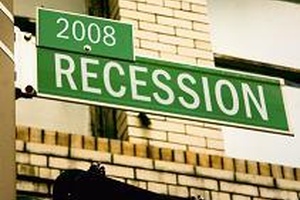
We are entering in different phase in stock market weakness, one that gives me some cause for optimism. I believe that in recent weeks what we have witnessed is a transition from “liquidity fear” to “recession fear” or for the more technical, from liquidity risk to credit risk. It may be hard to notice the difference. Both forces are bad for stock markets in general. But they have a different impact on individual stocks and therein lies the opportunity for opportunistic investors who don’t mind a bare-knuckle ride in search of superior returns. read more
-
29 October 2008
Some ways out of the financial crisis

Everyday, as a matter of urgency, central banks and governments are fighting against the fire. An amazing blow to confidence has burst within the most sophisticated financial system which has ever been experienced. Before smoke and dust fall down, it is wise to investigate the ways out on which governments should drive the players of this drama in order to contain damages and speed up reconstruction. read more
-
10 October 2008
Not a G7 but an Emergency meeting of a new G16 to stabilize the world economic crisis

The 1980s have seen the 2nd wave of economic globalization of modern history. It should not end like the first during the 19th century. Economic crises and wars often keep pace. The first energy shock of 1973, the start of the economic reforms in China at the end of the 1970s then in India and finally the fall of the Berlin Wall in 1989, gradually led to a huge transformation of the world economy. The idea to gather a G7 or even the G8 under the current format is clearly unsuitable when we see clouds accumulating on emerging countries, China and India included. read more
-
13 October 2007
The French Mark on Globalization

On September 28, Dominique Strauss-Kahn became the new Managing Director of the International Monetary Fund. He follows in the footsteps of his French predecessors, Pierre-Paul Schweitzer (1963-1973), Jacques de la Rosière (1979-1987) and Michel Camdessus (1987-2000). Indeed, French bureaucrats have led the IMF for almost half of its existence. Look beyond 19th Street, and you will find the mark of Frenchmen in many more of the world's most influential economic organizations, from Pascal Lamy, who has been Director General of the World Trade Organization since 2005, to Jean-Claude Trichet, who has headed the European Central Bank since 2003. read more
-
10 October 2007
Financial crisis: why it may last

Since the month of August, economists have been trying to understand why something that was supposed to be positive for global growth, namely the diversification of risk through securitization, had turned out to be the source of the recent crisis. The first reaction was to characterize this as a liquidity crisis - some banks were having undue difficulties in securing funds in the interbank market, and thus central banks reacted by providing liquidity through open market operations. Many central bankers and academics started smiling with an "I told you so, there was so much excess liquidity, this was bound to happen", and adopted a tough anti-moral hazard stance. More than a month, and many billions of dollars of extra liquidity injections, later the situation in money and credit markets has not improved. Central banks have added liquidity to a situation of already "excess liquidity" to tackle an apparent liquidity crunch, and yet nothing has got better. Perhaps it was not about liquidity, after all. read more
-
4 May 2006
Is the IMF still useful?
IMF reform has been on the policy agenda for as long as most of us can remember. Since the breakdown in the early 1970s of the Bretton Woods System that the IMF had been created to oversee, observers have questioned whether the Fund still has a mission and tools appropriate to the task. For the older among us, recalling these earlier discussions, it seems like the IMF is always in search of a new job description. -->IMF reform has been on the policy agenda for as long as most of us can remember. Since the breakdown in the early 1970s of the Bretton Woods System that the IMF had been created to oversee, observers have questioned whether the Fund still has a mission and tools appropriate to the task. For the older among us, recalling these earlier discussions, it seems like the IMF is always in search of a new job description. read more
-
8 April 2006
Stock Market Consolidation: A New Game, But Who Sets the Rules?
Financial markets have a bad habit of moving too fast. Many on the marketplace had become used to think that the European monetary union (EMU) meant the creation of an integrated European capital market alongside the progressive disappearance of fragmented, national markets. This left plenty of room for difficult policy questions: should securities regulation be kept separated from prudential supervision, as in the US or France, or brought under the same roof, as in the UK or Germany? Should the system be based on the coordination of national authorities, as now in the so-called Lamfalussy process and its intricate architecture of Europe-wide committees, or should a new European agency be created? Should the approach cover the whole EU and its 25 (soon 27) member states, or be limited to the Eurozone or the continent to bypass a possible British veto? But one thing seemed sure: the relevant scope of the next steps would be of pan-European scale. read more