-
28 December 2021
Nuclear power and natural gas: what lies behind EU inconsistencies?

On December 21, the European Commission has just presented the new “state aid for climate, environmental protection and energy” regime, the main objective of which is to facilitate the achievement of the 2030 and 2050 climate objectives by authorising subsidies for all technologies contributing to the energy transition. However, nuclear power is excluded, while natural gas-based electricity production is covered. Why such an inconsistency? read more
-
25 May 2021
Europe vs. America: the federal governance matters

Europe and America have been strikingly different in terms of the Corona-era big-relief packages, and the roll out of Covid-19 vaccination. These differences are rooted in differences in their federal governance. Governance differences in the federal system matters also for migrants skill composition, tax burden, and the generosity of the welfare state. read more
-
26 June 2020
European funds and southern Italian regions: a critical view
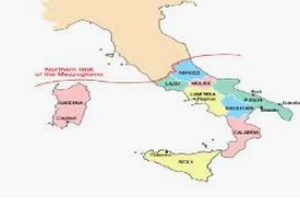
At this stage of the Covid-19 crisis, there is a purpose on the table (among others) to use ordinary European Funds for emergency, without constraints. This is the opportunity to focalize the attention of public opinion in terms of the resources that Europe gives to Southern Italian regions, in particular, due to the fact that they are unable to spend. read more
-
25 June 2020
Post Covid-19 economy: state capitalism with expiration date

Public spending is bound to intensify over the coming months and even years. Increased spending will undoubtedly go hand-in-hand with increased scrutiny and demand for fiscal discipline. An old ally – the SWF – might indeed be governments’ best hope in balancing public responsibility with private interests in a post-pandemic economy. read more
-
9 May 2020
Eurozone auf Wiedersehen?

With its recent ruling on the EBC's QE programm, the German Federal Constitutional Court just crossed the Rubicon and for the first time ever nullifies action by an EU institution (the ECB) which had been declared fully legal by another EU institution (the ECJ) – and on the basis of economic arguments on which it has no expertise. It now remains to be seen what will happen. read more
-
4 February 2019
The European way of designing smart cities

Though often regarded as more advanced than their American counterparts in both design and implementation of innovative models, European cities face specific issues that challenge the very notion of “smart city.” Is it possible for a data-driven city to preserve the delicate mix of rational and irrational that seems to define the European urban experience? read more
-
19 July 2018
Drowning, not waving: the UK and Brexit
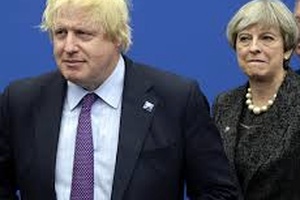
So far Mrs May has been able to hold her party together – there currently seems to be no desire for a leadership challenge from those dissatisfied with her proposals, and there is no readily apparent leader in waiting. A challenge may come later in the year, especially if the government is seen as making any further concessions to the EU. Meanwhile preparations for a No Deal outcome are under consideration. Thus, the British government is not quite drowning and is certainly not waving. But its boat is certainly unstable. read more
-
23 May 2018
Fiscal money is an illusion, not a solution

In their recent Telos post, a group of Italian economists who name themselves the Group of Fiscal Money assert that Credit Tax Certificates, which are tax assets, would not increase the Italian government deficit and would even contribute to curtail the debt burden. I am not convinced by their argumentation. read more
-
23 May 2018
Fiscal money as a solution to Italian eurowoes
As fiscal rules constrain Italy’s ability to reflate demand by issuing debt, and with monetary policy being as accommodative as it gets, an alternative instrument is required. Fiscal Money provides such instrument. Our proposal is for government to issue transferable and negotiable bonds, which bearers may use for tax rebates two years after issuance. read more
-
17 January 2018
Réconcilier solidarité et discipline de marché dans la zone euro
La zone euro goûte enfin au bonheur d’une reprise robuste. La tentation est forte pour les responsables politiques de baisser la garde. Ce serait une grave erreur car la monnaie unique reste vulnérable. Quatorze économistes français et allemands, considérant que la polarisation du débat entre solidarité (entre États membres) et responsabilité (au niveau de chacun d’entre eux) constitue une fausse alternative, proposent six réformes… read more
-
30 March 2016
Protect or innovate? Of Marseille Soap and other traditional products

How to protect non-food products which are emblematic of a geographical area? The European Commission is working on the extension of both protected designation of origin (PDO) and protected geographical indication (PGI) system for non-agricultural products. What are the challenges? Is such a regulation adapted? read more
-
11 March 2016
Boris Johnson, tea bags and the complexity of law
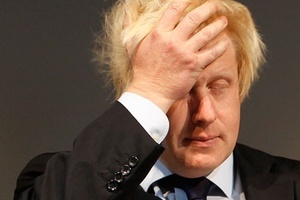
Boris Johnson, in his plea for Brexit, develops the familiar theme of excess of niggling and stupid standards coming from Brussels. But the proliferation of legal texts is not to be blamed on the European Union. It reflects the tensions between conflicting aspirations of a complex society, the demand for ever greater security and the refusal of any hazard. read more
-
19 June 2015
The case for a European data policy

A consistent set of European standards could prove to be a lever for framing a digital industrial policy. In a legal framework where individuals come under high protection, the winners will be the enterprises who inspire enough confidence to obtain the users’ consent to access and use their personal data. Trust, says Rachel Botsman, is the currency of the 21st Century. Maybe. But data is the commodity of the future, and those who can combine trust and valuable data can lead the race. It has just started. read more
-
12 April 2011
The trouble with the European Stability Mechanism

The meeting of the European Council on 24-25 March focused on shoring up the battered Eurozone infrastructure through the European Stability Mechanism. This column argues that the mechanism is seriously flawed. It says it is unlikely to withstand the shock of a severe financial crisis and may even spread the damage to high-debt countries, while leaving the Eurozone in the grip of paralysing vetoes. (in French; English version available on VoxEU) read more
-
18 February 2011
The fog of currency war

One way to expose the economic mumbo-jumbo that is applied to the Chinese exchange rate by otherwise respectable economists is to look at it from the perspective of Germany and international trade. China-bashers, who from stuttering economies lecture those who have presided over the biggest economic miracle that has occurred without thieving foreign lands or labour, like to focus on current account imbalances. A better measure of competitiveness would be the trade account. The current account includeshot money inflows that come under the exchange control restrictions and have ballooned since the China-bashers created the belief that the renimbi is a one-way appreciation bet. Chinas annual trade surplus with the world was $184.5bn at the end of 2010 or 3.6% of GDP. More than ten significant economies have a larger trade surplus as a percent of GDP than China. Natural-resource-poor Germany is the most interesting analogy and it has the largest 12-month trade surplus in dollar terms in the world: $205.4bn or 6.0% of GDP. (in French) read more
-
4 February 2011
Energy: Nabucco’s comeback

Since its launching in 2002, the Nabucco pipeline project has had several lives. Many times it was given as death, but it finally managed to rise from its own ashes. Even though the Russian-Ukrainian gas crisis in 2006 transformed Nabucco into a top priority European project, in the last few years it advanced a little but backed up a lot, resulting in barely concealed mockery. This pattern is true and depicts Nabucco’s situation before the economic crisis. The latter, with its negative effects, brought a breath of fresh air for the European project and its proponents have used it rather wisely. The latest developments in Azerbaijan and Turkmenistan are encouraging with regard to the equation of supply sources. It seems that Nabucco is back. read more
-
23 December 2010
The European debt crisis: worrisome delusion
In the December 17 issue of the Financial Times, Lorenzo Bini-Smaghi has produced a brilliant, if slightly patronizing, defense of the no-default strategy currently pursued by the euro area authorities. His arguments are that public debts are widely-held instruments so that a default would harm domestic banks and domestic citizens, possibly triggering bank runs and forcing governments to take administrative measures like the Argentinean corralito, that true democracies do not do this kind of things, that it would be a “quick fix” with much worse consequences than tight fiscal policies and structural reforms. These are mostly solid arguments though it would be interesting to understand why democracies cannot default and what structural reforms have to do with fiscal discipline and, if they do, how soon their beneficial effects can be felt. (in French; an English version has been published on VoxEU) read more
-
5 November 2010
EU: tax harmonization in sight?

Led by EU Commissioner Algirdas Šemeta, the new Tax Policy Group brings together personal representatives of EU Finance Ministers to discuss key tax policy issues. The Group aims to work on fundamental topics such as how taxation can contribute to a stronger Internal Market, to the growth and competitiveness of Europe's economy and to a "greener" economy. It will also serve as a forum for deeper discussion on priority matters, such as financial sector taxation, common consolidated corporate tax base and the new VAT Strategy. What are the prospects for tax harmonization? (in French) read more
-
15 October 2010
The Two Rebalancing Acts

A “strong, balanced, and sustained world recovery” as demanded by the G20 is a daunting challenge for policymakers. This column argues that two rebalancing acts are required: internal rebalancing – replacing government spending with private-sector demand, and external rebalancing – addressing the global imbalances between exporting and importing countries. These two rebalancing acts, it adds, are taking too long. (French version on Telos, English version on VoxEU). read more
-
29 September 2010
EU: new ways of the small and middle economies

A quick trip through the Czech Republic, Sweden, Slovakia and Poland offers curious impressions of economic situation. All these countries are seeing a fast economic recovery of around 4 percent this year, and the contrast could hardly be greater to the current US depressed mood. Unemployment is the main concern but bubbles are on their way. One can also wonder about the policies carried in these countries whose leaders speak a new language. read more